
When you open a Kakobuy spreadsheet and see shoes, t-shirts, hoodies and jackets all listed side by side, the real challenge is not finding products—it is deciding which category actually fits your needs, budget and shipping plan. Choosing between shoes t shirts hoodies and jackets in Kakobuy spreadsheets means weighing fit reliability, weight, QC visibility and how each item behaves once it leaves China. This article breaks down the practical differences so you can pick the right category without endless scrolling or guesswork.
Smart Search Tip: Looking for more? To find items instantly, use single-word keywords (e.g., “SHOES” or “T-SHIRT”) instead of long sentences for the best results.
Quick Decision Framework
Start with your primary goal. If you need reliable everyday footwear that must match foot length and sole shape, shoes come first. If you want low-weight, easy-to-layer tops that travel well, t-shirts are usually the safer entry point. Hoodies sit in the middle—higher visual impact but more variables in fabric thickness and fit. Jackets add structure, hardware and higher shipping cost, so they reward careful measurement checks.
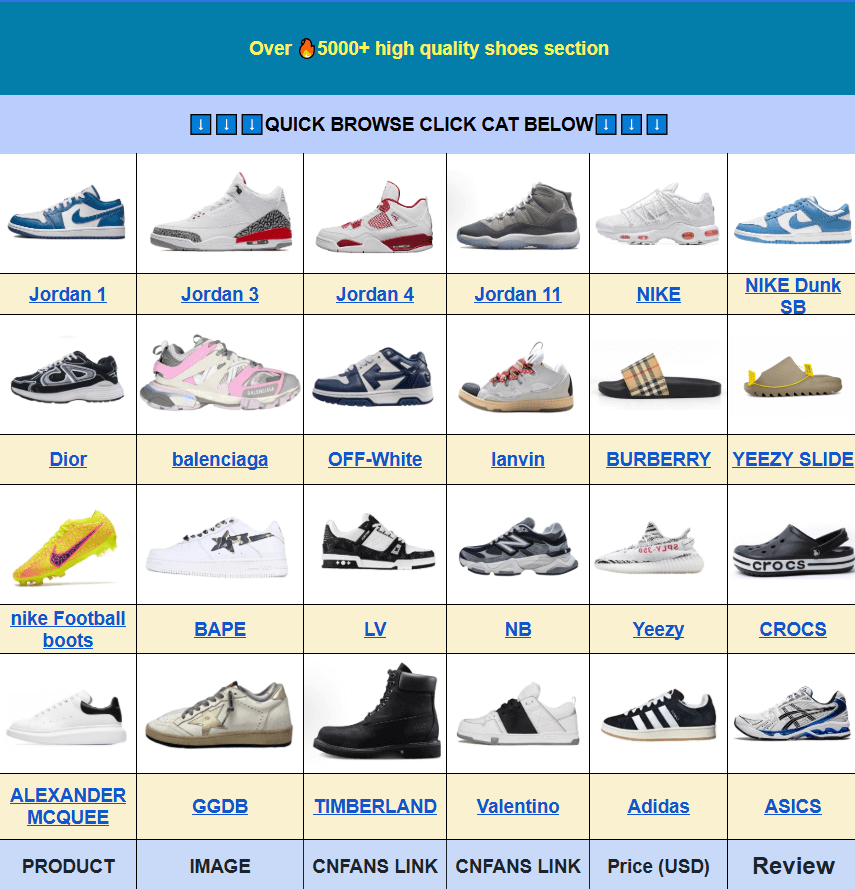
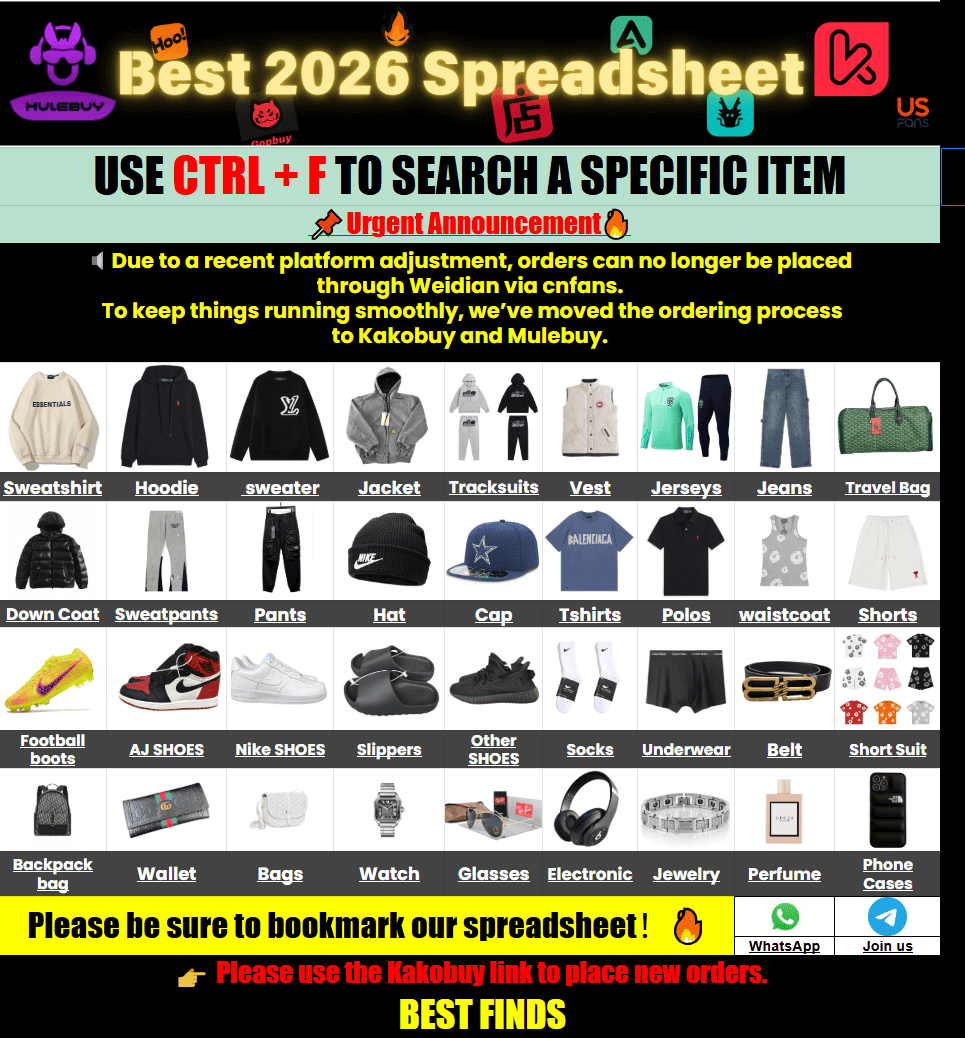
Most international shoppers begin with one or two categories rather than filling a cart across all four. The Kakobuy spreadsheet 2026 makes this easier by turning dense spreadsheet rows into a browsable catalog, but the decision still rests on matching the item type to your actual use case and destination rules.
How the Four Categories Differ in Practice
Shoes demand the highest measurement precision. Insole length, last shape and sole thickness vary more between batches than most tops. A listing that looks correct in photos can still feel narrow or short once it arrives. T-shirts are more forgiving on length and chest width, but print placement, collar shape and fabric drape still need scrutiny.
Hoodies introduce thickness, cuff elasticity and hood proportion. A hoodie that measures correctly on the chest can still feel bulky or short in the sleeves. Jackets layer additional variables: zipper quality, shoulder construction, lining and overall weight. These factors affect both wearability and the final shipping cost more than a simple t-shirt.
From a sourcing perspective, the safest first order for many new users is a well-measured t-shirt or a pair of shoes with clear insole data. Hoodies and jackets become more attractive once you have already reviewed QC photos and understand how the agent handles returns or exchanges.
Side-by-Side Comparison
| Factor | Shoes | T-Shirts | Hoodies | Jackets |
|---|---|---|---|---|
| Primary measurement risk | Insole / foot length | Chest width & length | Chest, sleeve, body length | Shoulder, chest, sleeve, overall length |
| Typical weight impact | Medium–high | Low | Medium | High |
| QC photo usefulness | High for shape & sole | High for print & collar | High for fabric & logo | High for hardware & structure |
| Beginner friendliness | Moderate | High | Moderate | Lower |
| Shipping sensitivity | Volume + weight | Low | Medium | High |
Use the table as a starting filter, not a final rule. A lightweight jacket can ship more cheaply than a heavy pair of shoes, and a thick hoodie can outweigh several t-shirts.
Sizing and Measurements That Matter Most
Generic size labels (S, M, L, XL) transfer poorly across manufacturers and batches. Always compare the seller’s measurements against a garment you already own and like.
For shoes, prioritize insole length or foot length data when available. Measure your own foot from heel to longest toe and add a small allowance if the listing notes a tight last. For t-shirts, chest width (armpit to armpit) and body length are the two numbers that prevent most returns. Hoodies need those plus sleeve length from shoulder seam and, when listed, cuff and hem width. Jackets benefit from shoulder width, chest, sleeve and overall length; a short shoulder measurement often creates the most noticeable fit issues.
A common mistake is assuming the size that works in one category will work in another. A medium t-shirt does not automatically equal a medium hoodie or jacket from a different batch. When measurements are incomplete, treat the listing as higher risk and move on to one that provides clearer numbers.
QC Checkpoints by Category
QC photos show what is present on the day the agent photographed the item. They cannot prove long-term durability, exact fabric composition or how a garment will feel after months of wear. Focus on what the photos can realistically confirm.
Shoes: check sole alignment, stitching along the upper, shape symmetry between left and right, and any visible glue or uneven panels. Logos and branding should look clean and centered.
T-shirts: examine print or graphic alignment, collar shape, side seams and overall color consistency under the lighting used. Look for loose threads or obvious fabric flaws near the hem and sleeves.
Hoodies: inspect the hood proportion, drawstring quality, cuff and hem elasticity, and any logo or graphic placement. Fabric thickness is harder to judge from photos alone, so compare the listed weight or description with similar items when possible.
Jackets: pay attention to zipper function (if shown), button or snap alignment, shoulder seams, lining visibility and overall structure. Hardware that looks cheap or uneven in QC photos often remains a weak point after delivery.
When reviewing listings on the Kakobuy Spreadsheet T-Shirts section or other category pages, treat missing or blurry QC as a reason to keep looking rather than a minor inconvenience.
Weight, Shipping and International Factors
Shoes and jackets usually drive package weight and volumetric weight higher than t-shirts. A multi-item order that mixes heavy shoes with several hoodies can push you into a more expensive shipping tier. T-shirts remain the most flexible for keeping total weight low while still filling a parcel.
For destinations in the United States, United Kingdom, EU countries, Australia and New Zealand, rules on customs, VAT/GST and restricted items differ. Some routes favor declared-value practices that keep paperwork simple; others apply duties once a threshold is crossed. Check the current guidance for your country rather than relying on older forum posts. Carrier choice also matters: some routes handle footwear and structured outerwear more smoothly than others, but performance changes over time.
Biosecurity checks can apply to certain materials in Australia and New Zealand. Packaging condition shown in QC photos is useful here—clean, intact packaging reduces the chance of extra scrutiny, though it never eliminates it.
Common Selection Mistakes
Ordering across all four categories in a first parcel often creates measurement and QC overload. Another frequent issue is ignoring listed measurements because the photos look appealing. A third is treating every hoodie or jacket as interchangeable with retail sizing from local stores.
Shoppers also sometimes undervalue shipping cost differences. A slightly more expensive t-shirt that ships in a lighter total package can end up cheaper overall than a “bargain” pair of shoes that forces a heavier rate. Finally, waiting until the last moment to review QC photos leaves little room to request additional angles or decide on a return before the item is packed for outbound shipping.
Recommended Workflow for First-Time Orders
1. Decide the primary category based on your most urgent need and the measurement data available.
2. Filter for listings that show clear measurements and multiple QC angles.
3. Compare two or three options within the same category rather than jumping between shoes and jackets immediately.
4. Check total estimated weight once you have a shortlist.
5. Review QC carefully, focusing on the category-specific points listed earlier.
6. Confirm the agent’s process for additional photos or returns before the parcel is sealed.
This sequence keeps decisions sequential instead of scattered across dozens of open tabs.
FAQ
Q: Which category is usually safest for a first order?
A: T-shirts tend to be the most forgiving on fit and the lightest for shipping. Shoes are a close second when clear insole data is provided.
Q: Can I mix shoes and jackets in the same parcel without problems?
A: Yes, but watch total weight and volumetric weight. A mixed order can jump shipping tiers quickly.
Q: How accurate are the measurements listed for hoodies and jackets?
A: They vary by seller and batch. Always cross-check against a garment you own rather than relying only on the size letter.
Q: Do QC photos show fabric thickness well enough to decide on a hoodie?
A: Not reliably. Photos help with appearance and construction, but thickness and hand-feel remain estimates until the item arrives.
Q: Should I prioritize cheaper shoes or better-documented ones?
A: Better documentation usually reduces the risk of a poor fit more than a small price difference saves.
Q: Does the same size work across t-shirts and hoodies from different listings?
A: Rarely. Treat each listing’s measurements independently.
Choosing between shoes, t-shirts, hoodies and jackets is less about finding a single “best” category and more about matching the item’s measurement risk, weight profile and QC visibility to your own priorities. Use the spreadsheet catalog to compare options quickly, focus on the numbers and photos that matter for each type, and keep early orders simple. That approach turns a large product list into a practical shortlist instead of an overwhelming decision.