
Shipping weight can change the value of a product long after you have found an interesting entry in a Kakobuy spreadsheet. A low-priced item may look attractive until its weight, packaging and destination-specific shipping conditions are considered, while a slightly more expensive product can make more sense if the overall shipment is more efficient. Understanding the relationship between product weight and shipping is therefore useful when comparing Kakobuy finds, especially for international orders.
Smart Search Tip: Looking for more? To find items instantly, use single-word keywords (e.g., “SHOES” or “T-SHIRT”) instead of long sentences for the best results.
- Why Weight Changes the Way a Find Looks
- Product Weight Is Only the Starting Point
- How to Compare Value Without Focusing Only on Price
- Why Product Type Matters
- What QC Can Tell You About a Heavy or Light Item
- What Changes for International Shipments
- A Better Way to Evaluate a Find
- Frequently Asked Questions
Why Weight Changes the Way a Find Looks
The price displayed beside a product is only one part of the sourcing decision. For international shoppers, the eventual shipment can involve several variables, and weight is one of the most important because shipping methods may use actual weight, volumetric weight or a combination of rules.
That does not mean a heavier product is automatically poor value. A substantial jacket, for example, may naturally weigh more than a lightweight T-shirt. The useful comparison is between the product’s characteristics, its price and the shipping implications rather than weight in isolation.
This is particularly relevant when browsing a large web-based product directory. A shopper may find several similar entries and immediately compare their listed prices. A better approach is to ask whether the products are genuinely comparable. If one option has different dimensions, construction or packaging requirements, the apparent price difference may not tell the full story.
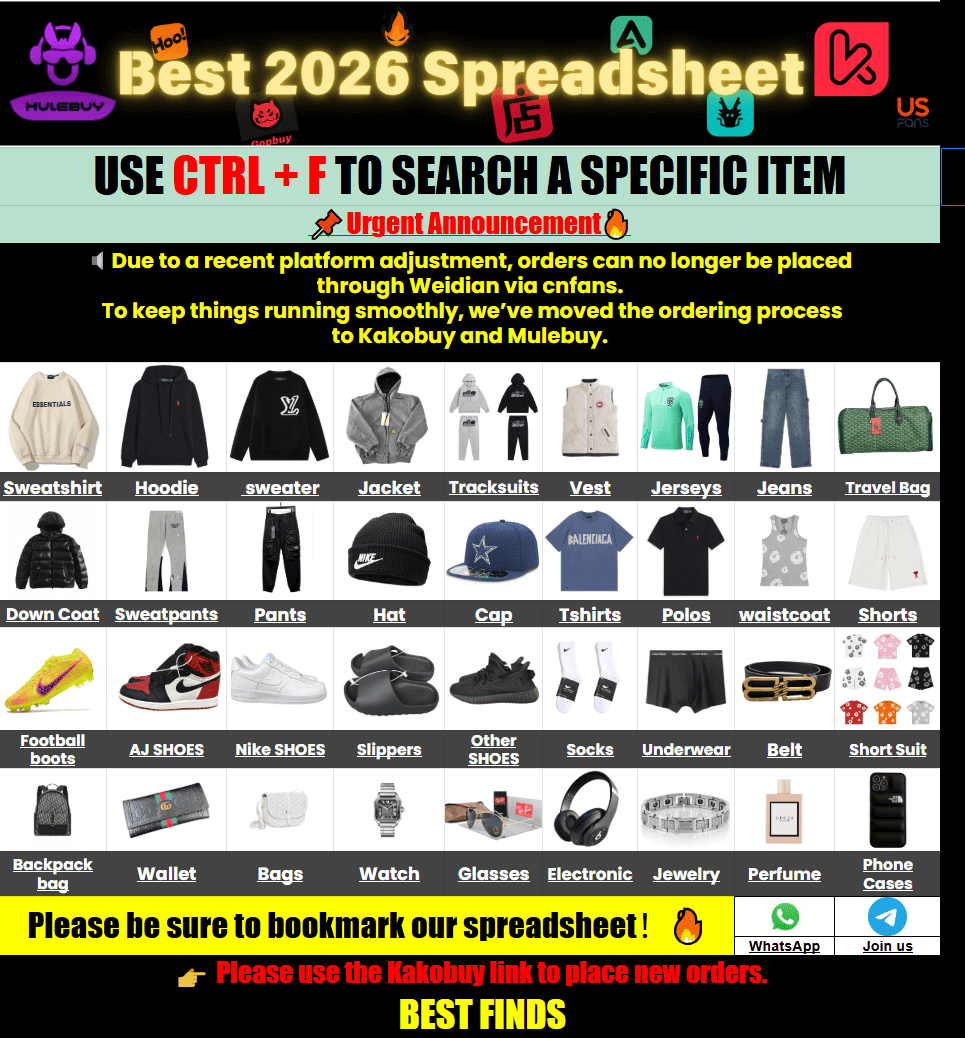
The Kakobuy spreadsheet 2026 can be useful at the discovery stage because it makes a large collection of sourcing information easier to browse. Once a shortlist has been created, however, weight and shipping-related information deserve their own review.
Weight matters differently at different stages
There are three useful points at which to think about weight:
- Before selection: use available information to identify whether an item is likely to be lightweight, bulky or substantial.
- During comparison: consider whether differences in construction or product type explain meaningful differences in weight.
- Before shipment: check the current ordering platform’s shipping calculation and the actual parcel information available at that stage.
The third stage is especially important because an estimated product weight and the final packed shipment are not necessarily the same thing.
Product Weight Is Only the Starting Point
A product’s own weight does not always equal the weight used to determine an international shipping charge. Packaging, protective materials and the final parcel dimensions can all affect the shipment.
Some shipping methods also consider volumetric weight. This is relevant when an item occupies considerable space relative to its physical mass. A lightweight but bulky product can therefore behave differently from a compact, dense item when shipping calculations are applied.
For shoppers comparing listings, this creates an important distinction between item weight and shipment weight. The first describes the product. The second relates to what eventually travels through the carrier network.
| Information | What It Helps You Understand | What It Does Not Guarantee |
|---|---|---|
| Product weight | How heavy the individual item may be | The final shipping charge |
| Product dimensions | How large the item is before packing | The final parcel dimensions |
| Package weight | The weight of the prepared shipment | That every shipping method will price it identically |
| Package dimensions | The space occupied by the shipment | The final delivery cost for every destination |
| Shipping method | Which pricing and routing rules may apply | A fixed delivery price across countries |
For this reason, avoid treating an isolated weight number as a complete shipping estimate. If the current ordering platform provides an updated shipping calculation after the items are prepared, that information is more relevant to the actual shipment than a general figure found in a community listing.
How to Compare Value Without Focusing Only on Price
A useful way to compare products is to think in terms of landed cost rather than sticker price alone. The exact components vary by order and destination, but the basic idea is straightforward: the product price is considered alongside applicable shipping and other costs that are relevant to completing the purchase.
Imagine two broadly similar outerwear entries. One has a lower listed price but is substantially heavier. The other costs somewhat more but is lighter and more compact. It would be premature to declare either one the better value without current shipping information. The weight difference is a signal to investigate, not a conclusion by itself.
The same reasoning works in reverse. A heavier item can still make sense if the additional weight reflects useful construction, greater coverage or another characteristic the shopper actually wants. Shipping efficiency should inform the comparison, not replace the product criteria.
Ask what the extra weight represents
When two similar products have noticeably different weights, look for a plausible explanation in their specifications or visible construction. Possible areas to investigate include garment thickness, lining, hardware, sole construction, dimensions or packaging requirements.
For example, a winter jacket may naturally require more material than a lightweight jacket. If you are specifically looking for cold-weather outerwear, comparing the products solely by weight would miss the actual purpose of the purchase.
The important point is to avoid making unsupported assumptions. If the listing does not provide enough information to explain a weight difference, record it as an unresolved difference and check the current product information before ordering.
Why Product Type Matters
Weight becomes more meaningful when you compare products within the same general category. Comparing a T-shirt with a jacket tells you very little about shipping efficiency because their intended construction and dimensions can be completely different.
Within outerwear, however, weight can become a useful secondary comparison factor. You can examine garment length, shoulder width, chest width, sleeve length and other available dimensions alongside the listed product information. This gives you a better picture of what the weight represents.
A shopper researching jackets can also browse the Kakobuy Spreadsheet Jackets category to narrow discovery before examining individual entries.
For other product types, different specifications may matter more. Footwear can involve foot length, insole length and sole construction. Accessories may depend more heavily on product dimensions and hardware. Clothing measurements should generally be compared using actual dimensions rather than relying only on S, M, L or XL labels, because sizing conventions can differ between manufacturers and batches.
This category-first approach makes weight a supporting metric instead of an arbitrary number.
What QC Can Tell You About a Heavy or Light Item
QC photographs can provide useful context when weight is part of the comparison, but they should be interpreted carefully. Photographs cannot normally tell you the exact mass of an item. They can, however, show physical characteristics that may help explain why products differ.
For clothing, inspect visible construction such as lining, layered panels, stitching, hardware and overall structure. A heavily constructed garment may look materially different from a lightweight one. For jackets in particular, the photographs may show whether the garment has substantial visible components, multiple panels or additional hardware.
For footwear, photographs can help with visible sole construction, upper structure, stitching and hardware. They can also reveal obvious defects that would make the listing less attractive regardless of its weight.
The useful principle is simple: use photographs to observe physical characteristics, but do not use them to invent a precise weight or material specification. A photograph cannot conclusively establish fabric composition, durability or long-term performance.
A practical QC and weight checklist
- Does the product appear substantially structured or lightweight?
- Are there visible layers, thick panels or additional hardware?
- Do the listed dimensions make sense for the type of product?
- Is a weight figure actually provided, and is its context clear?
- Could the product’s dimensions affect volumetric shipping calculations?
- Are the available photographs consistent with the written description?
- Are there visible defects that matter more than a small weight difference?
This prevents weight from becoming a misleading shortcut. A few hundred grams may be less important than an incorrect size, missing feature or visible construction issue, depending on what the shopper is trying to achieve.
What Changes for International Shipments
Shipping weight becomes especially relevant when products are sent internationally. A shopper in the United States, Canada, United Kingdom, Europe, Australia or New Zealand may encounter different shipping routes, available services, customs processes and tax arrangements. The exact rules depend on the destination and the current service being used.
Do not assume that a shipping calculation seen for one country applies to another. The same parcel can have different available routes or pricing structures depending on its destination. Shipping services can also have restrictions affecting particular product categories or package characteristics.
For European destinations, VAT and customs treatment can depend on the shipment structure and applicable arrangements. Concepts such as IOSS, DDP and DDU may appear in international commerce, but their relevance depends on the specific transaction and service. Check the current ordering and customs information for the destination rather than relying on an old community post or general assumption.
Australia and New Zealand can also have destination-specific tax, customs and biosecurity considerations. The same principle applies elsewhere: current government and carrier guidance should take priority when a shipment raises a regulatory question.
Why consolidation can change the calculation
When several products are being considered together, the final parcel is more important than the weight of any single item. Packaging can change the total dimensions, and the relationship between actual and volumetric weight can affect which shipping calculation becomes relevant.
This is one reason not to calculate an international shipment solely by adding numbers from individual product listings. Product-level information is useful for planning, but the prepared parcel provides a more relevant checkpoint before dispatch.
There is also a practical trade-off between adding another low-priced item and keeping a shipment smaller. If the additional product increases the parcel’s weight or dimensions, its effective cost to the shopper may be higher than its catalogue price suggests.
A Better Way to Evaluate a Find
A weight-aware sourcing workflow does not need to be complicated. The key is to introduce shipping considerations at the right moment rather than trying to calculate an exact final cost before the necessary information exists.
- Find relevant products. Use short keywords and category navigation to create a manageable shortlist.
- Check the actual listing. Review the current product name, available options, dimensions and other supplied information.
- Compare like with like. Look at products serving the same purpose before using weight as a comparison point.
- Inspect available QC material. Look for visible construction, hardware, shape and defects that could explain meaningful differences.
- Record measurable specifications. For apparel, note relevant dimensions rather than relying only on standard size labels.
- Check weight information. Determine whether a listed number refers to the product, packaging or another measurement.
- Consider parcel efficiency. Think about whether the product is compact, bulky, lightweight or dense.
- Recheck shipping information before dispatch. Use the current ordering platform’s available calculation for the actual destination and shipment.
This workflow also helps prevent a common mistake: rejecting an otherwise suitable product because it appears slightly heavier without understanding why. Weight is valuable because it adds another dimension to the comparison, not because it provides a universal rule for deciding what to buy.
Frequently Asked Questions
Q: Does a heavier product always cost more to ship?
A: Not necessarily. Shipping calculations can depend on actual weight, volumetric weight, parcel dimensions, destination and the selected shipping method. Check the current calculation for the prepared shipment.
Q: Can I calculate the final shipping price from the product weight?
A: Product weight can help with an initial estimate, but it may not be enough for an exact figure. Packaging and parcel dimensions can affect the calculation, particularly when volumetric weight is relevant.
Q: Why should I compare weight between similar Kakobuy finds?
A: Weight can reveal a meaningful difference between otherwise similar listings. It may prompt you to investigate construction, dimensions or packaging. It should be treated as one comparison factor rather than a standalone quality score.
Q: Can QC photos confirm how heavy a product is?
A: No. QC photographs can show visible construction and physical characteristics, but they cannot reliably establish an exact product weight. Use a supplied measurement or current shipment information when available.
Q: Should I choose a lighter product to save on international shipping?
A: That depends on the product and your priorities. A lighter item may have shipping advantages, but a heavier product may offer characteristics you specifically need. Compare the complete available information rather than optimizing for weight alone.
Q: Does the same weight have the same shipping impact in every country?
A: No. Destination, available routes, shipping services, parcel dimensions and local requirements can all affect the result. International shoppers should check current destination-specific information before dispatch.
Shipping weight is most useful when it is treated as part of a broader sourcing calculation. A product’s listed price can attract attention, but weight, dimensions, construction and the eventual parcel can change how that price should be interpreted. For shoppers using a community product directory, the practical goal is not to predict every shipping charge from a spreadsheet entry. It is to identify the products worth investigating, understand the variables that may affect their delivered cost, and verify the current details before moving from discovery to an external ordering platform.