
Making your first purchase through Kakobuy can feel more complicated than ordinary online shopping. You may find a product through a spreadsheet, need to understand seller information, compare measurements, review quality-control photos, and arrange international shipping before the order is complete. This guide to Kakobuy first time purchases breaks that process into practical steps, so you know what to check at each stage and which decisions should wait until you have enough information.
The key is to treat a product listing as a starting point for research, not as a guarantee of quality, fit, price, or delivery time. A careful first order begins with a clear product choice and ends only after you understand the costs, inspection options, and external ordering process.
Smart Search Tip: Looking for more? To find items instantly, use single-word keywords (e.g., “SHOES” or “T-SHIRT”) instead of long sentences for the best results.
Start With the Product, Not the Checkout
A common first-time mistake is to find an attractive image, copy a seller link, and immediately think about payment. That skips the research that makes the rest of the purchase easier. The website is primarily a discovery and product-catalog resource: it helps users browse sourcing information, compare listings, and identify items worth investigating. The eventual purchase is completed through an external shopping agent or ordering platform, subject to that platform’s procedures and availability.
Begin by deciding what you actually want to buy. For example, a pair of casual shoes and a lightweight jacket have different evaluation requirements. Shoes need attention to foot measurements, insole dimensions, sole construction, and shape. A jacket needs chest width, shoulder width, sleeve length, garment length, and details such as zippers or lining.
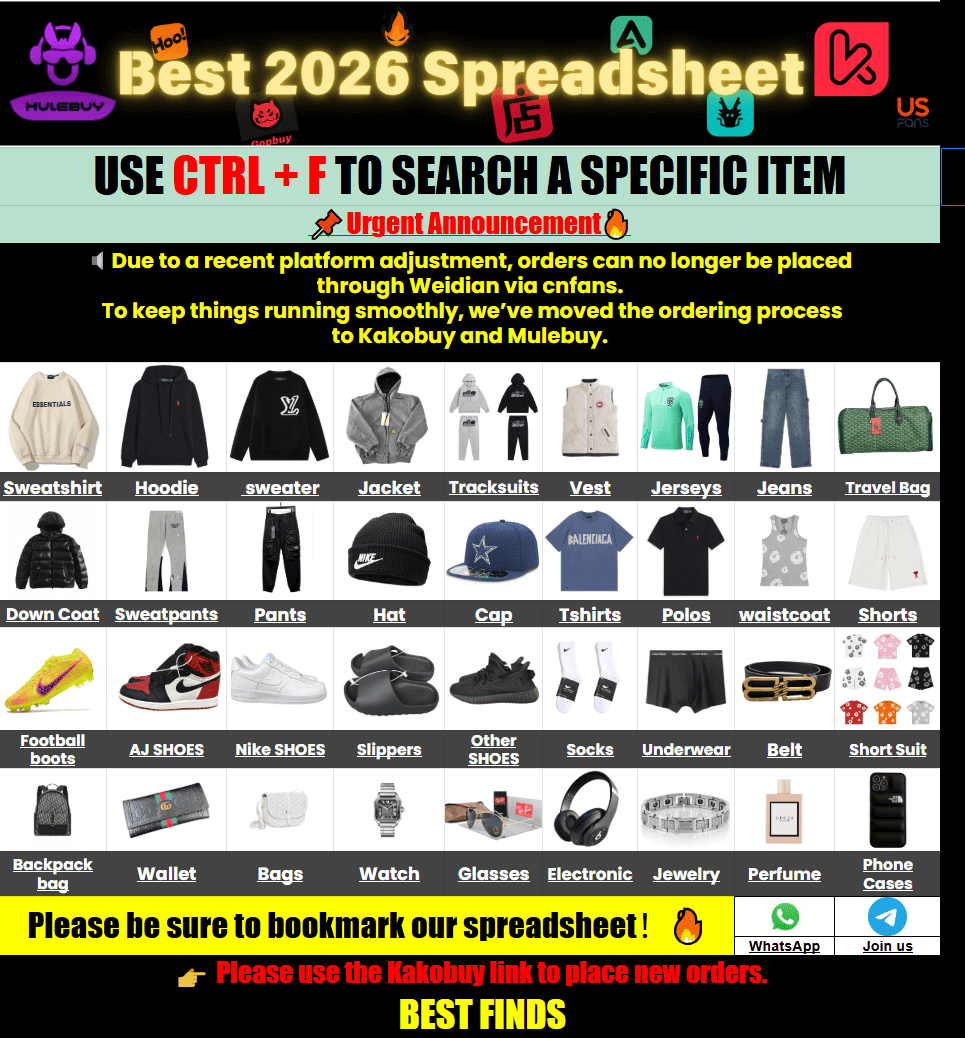
Start your research through Best Kakobuy spreadsheet and narrow the results by product type. The aim is not to choose the first item that appears. It is to find a small group of listings whose specifications and sourcing details can be compared.
How to Read a Kakobuy Listing Before Buying
Product listings drawn from spreadsheet-based sourcing information can contain different levels of detail. Some provide a clear title, images, price information, seller links, and measurements. Others may have limited descriptions or incomplete specifications. Do not assume that a missing field means the product has a particular feature.
Separate confirmed details from open questions
Before considering an item for purchase, identify which information is actually available:
- Product identity: Is the listing clearly describing the item you want, including its type, color, and relevant design details?
- Source information: Is there a usable seller or marketplace link, and does it lead to the intended product?
- Price: Is the displayed amount a product price, an estimate, or information that needs to be confirmed on the external platform?
- Specifications: Are measurements, materials, dimensions, weight, or other relevant details provided?
- Availability: Is there evidence that the item is currently available, or does availability still need to be checked?
These distinctions matter because a catalog can help you discover an item without confirming every condition of the eventual order. A seller may change a listing, a product may go out of stock, or the external platform may display a different price or shipping option.
Read the source link carefully
When a listing contains a link to a Chinese marketplace or seller page, verify that the destination matches the product description. Look for differences in color, size options, product version, and seller information. A similar image is not enough to establish that two listings are the same item.
For international shoppers, language differences can add another layer of uncertainty. Product names may be translated inconsistently, while terms relating to fabric, construction, dimensions, or accessories may require closer interpretation. If a specification matters to your decision, look for a measurable detail or ask the external ordering platform whether the seller can clarify it.
Build a First-Order Shortlist
A first purchase is easier to manage when you avoid treating the entire catalog as your shopping list. Select a few candidates and compare them against the same criteria. This is especially useful for shoes and accessories, where photographs can make different products appear similar even when their dimensions or construction differ.
| Comparison point | What to record | Why it matters |
|---|---|---|
| Product details | Type, color, size options, dimensions and included components | Prevents confusion between similar listings |
| Source | Seller link and any available seller information | Helps confirm where the product is actually sourced |
| Price information | Listed product price and any required confirmation | Separates an initial estimate from a final purchase cost |
| QC availability | Whether inspection photos or other checks are available | Clarifies what evidence may be available before shipping |
| Shipping relevance | Estimated weight, package size, and destination | Helps identify factors that may affect international shipping |
Keep a short note for each candidate. Record the reason it is interesting, the information that is missing, and the question that must be answered before ordering. This simple habit prevents you from confusing a promising image with a fully evaluated product.
When a lower price needs more investigation
A lower listed price does not automatically mean better value. It may reflect differences in materials, construction, included accessories, seller specifications, or the amount of information available. Compare like with like before making a decision.
For shoes, for instance, check whether two listings describe the same type of sole, upper construction, and included packaging. For accessories, compare dimensions, hardware, closure systems, and any stated material details. Photographs can show visible design differences, but they cannot establish every underlying property.
Use QC Photos as an Evidence Check
Quality-control photos are useful because they provide visual evidence of a particular item before it is shipped. They should be treated as a checkpoint rather than a complete product test. A photograph can reveal a visible defect or mismatch that was not obvious in the original listing, but it cannot prove how an item will perform after months of use.
When reviewing QC photos, work through the product from several angles. Look for details that are relevant to the category rather than trying to judge every possible quality characteristic from one image.
- Overall shape: Does the item appear to match the listed design and proportions?
- Visible construction: Are stitching, seams, edges, zippers, fasteners, and other exposed components shown clearly?
- Color and graphics: Are there visible differences between the listed color and the photographed item? Are prints or graphics aligned as expected?
- Labels and details: Are tags, logos, hardware, and other important features visible enough to inspect?
- Packaging: If packaging matters, is its condition shown, and does the listing identify what should be included?
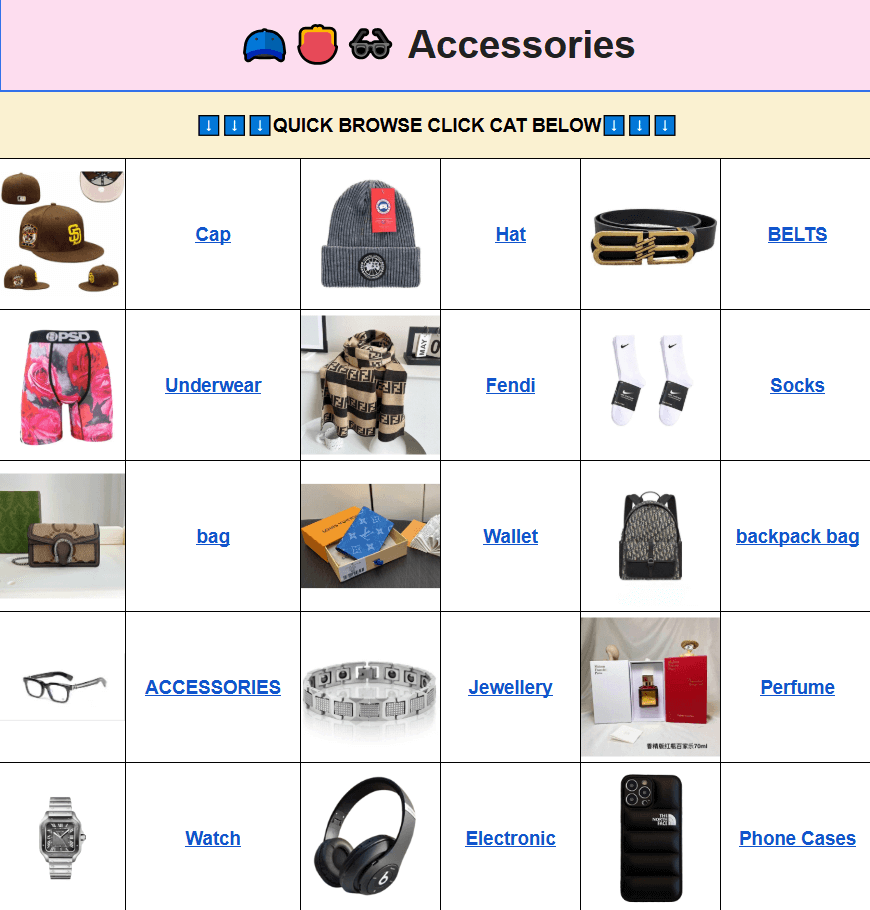
For footwear, pay particular attention to sole alignment, visible glue marks, stitching, shape, and whether the photographed size appears to match the order information. For bags, hats, belts, or other accessories, inspect hardware, seams, symmetry, closures, and surface appearance where the images allow it.
What photos cannot establish
Even clear photos generally cannot confirm exact fabric composition, long-term durability, chemical composition, authenticity, or sustained comfort. They also may not show every surface or internal component. If the images are incomplete, request additional information through the relevant ordering platform where that option exists.
If you identify a visible issue, do not assume that it will be corrected automatically. Check the external platform’s process for reporting problems, requesting clarification, or handling an item before shipment. The available options depend on the platform and the seller.
Measurements, Budget and Shipping Decisions
Use measurements instead of familiar size labels
Size labels such as S, M, L, or EU 42 are not universal. Different manufacturers, product types, and production batches can use different sizing systems. A more reliable approach is to compare the seller’s actual measurements with an item you already own or with your own measurements.
For clothing, useful measurements may include chest width, shoulder width, garment length, sleeve length, waist, and hip. For shoes, foot length and the seller’s insole length can help establish whether a size is worth considering. Do not assume that an insole measurement is identical to usable foot space, because shoe construction and shape can affect fit.
For accessories, check dimensions, strap length, opening size, capacity, and product weight when those specifications are relevant. If measurements are missing or unclear, treat sizing as unresolved rather than guessing from a familiar retail label.
Calculate the budget in stages
For a first-time order, separate the product price from the other possible costs. The final amount may depend on the external platform, seller, exchange rate, shipping method, package characteristics, and destination-specific charges.
- Product cost and any seller-side charges.
- Possible external platform or service fees.
- Domestic delivery or handling costs where applicable.
- International shipping based on the final package.
- Potential customs duties, VAT, GST, or other destination charges.
Do not treat a catalog price as a final delivered price. For the US, UK, EU, Australia, New Zealand, Canada, and other destinations, applicable import and tax rules vary. Check current official customs or tax guidance for your country, and review the external platform’s shipping terms before committing.
Choose shipping only after the parcel is understood
Shipping decisions become more meaningful after the product and package details are known. Weight, dimensions, packaging, destination, and available routes can affect the options. A bulky package may be influenced by volumetric weight, while restricted products or destination-specific requirements may affect which services are available.
Do not select a route based solely on a low initial estimate. Compare the stated delivery expectations, tracking information, insurance or compensation terms, and the handling of customs or taxes where the platform provides those details. DDP and DDU arrangements can differ in how charges are handled, so read the specific terms rather than assuming that one label guarantees a particular experience.
The First-Time Purchase Workflow
The following sequence keeps discovery, verification, and ordering separate. It is designed to reduce avoidable mistakes without assuming that every product or external platform follows exactly the same process.
- Choose a category. Start with the product type you actually need. If shoes are your target, browse the Kakobuy Spreadsheet Shoes section and identify a few relevant listings.
- Inspect the listing. Read the title, available images, source information, measurements, and any notes. Record what is confirmed and what still needs clarification.
- Open the source carefully. Check that the seller or marketplace destination corresponds to the intended product. Verify size, color, variant, and current availability where possible.
- Compare your shortlist. Evaluate product details, price information, specifications, and potential shipping implications side by side.
- Confirm the ordering route. Follow the external shopping agent or platform’s current process for submitting a product link, selecting a variant, and reviewing charges. Do not assume that the catalog itself completes the purchase.
- Review available QC evidence. If inspection photos are offered, check them against the product description and your specific concerns. Raise questions or report visible issues through the relevant platform before shipping.
- Recheck measurements and costs. Before finalizing, verify the selected size, quantity, package information, estimated shipping, and destination-specific charges.
- Arrange international delivery. Review the available shipping methods and their terms. Check whether customs, VAT, GST, or other charges may apply in your destination.
- Keep your records. Save the product link, selected variant, relevant measurements, QC evidence, and order information. These details can be useful if a question arises later.
A first order does not need to contain many items. A smaller, clearly documented purchase can make it easier to understand the external platform’s workflow, the quality of available product information, and the shipping process before considering a larger order.
Questions New Buyers Commonly Ask
1. Is the Kakobuy Spreadsheet the same as the final shopping platform?
No. The website is a product-discovery and sourcing-information catalog. It helps users browse and compare listings, while the external shopping agent or platform handles the eventual ordering process.
2. What is the safest way to choose a first item?
Choose a product with clear specifications, a usable source link, and enough information to evaluate its size or dimensions. Avoid committing to an item when key details remain unknown.
3. Can QC photos confirm that a product is high quality?
They can help you inspect visible details such as shape, stitching, color, graphics, and hardware. They cannot prove long-term durability, exact material composition, authenticity, or comfort over time.
4. Should I use my usual clothing or shoe size?
Use your usual size only as an initial reference. Compare actual seller measurements with your own measurements or a suitable item you already own. Manufacturer dimensions are more useful than assuming all size labels are interchangeable.
5. Does the catalog price include international shipping?
Not necessarily. Product cost and international delivery are separate considerations unless the external platform explicitly states otherwise. Confirm the final shipping estimate and any applicable destination charges before ordering.
6. What if the seller link or product information is unclear?
Do not guess. Look for another listing with clearer information, check whether the source destination matches the product, or request clarification through the relevant external platform. A missing specification should remain an open question until it is resolved.
A successful first purchase starts with a manageable research process. Use the catalog to discover products, verify the details that matter for your category, inspect available QC evidence, and understand the external platform’s costs and procedures before placing an order. That approach gives you a clearer basis for each decision without assuming that any listing, photo, or delivery estimate guarantees the final result.