
Maintaining an active product sourcing list requires consistent attention, especially given how rapidly marketplace listings expire or change. Sourcing databases that rely on raw spreadsheet formats frequently run into broken links, updated pricing, and inventory shortages. Establishing an automated or semi-automated routine for Kakobuy spreadsheet daily maintenance ensures that users access current product data without bumping into dead ends. By transitioning static data into a dynamic web interface, buyers can browse structured catalogs while keeping underlying links fresh and functional.
This isn’t just a spreadsheet—it’s a Live Supply Chain Index. We aggregate real-time data from Taobao, Weidian, and 1688, filtered through rigorous community quality benchmarks to help you discover only the “best-in-class” options. For easier access to Taobao listings, you can also use our Taobao link converter to quickly convert and work with product links.
Smart Search Tip: Looking for more? To find items instantly, use single-word keywords (e.g., “SHOES” or “T-SHIRT”) instead of long sentences for the best results.
Table of Contents
- Why Marketplace Links Expire and Break So Quickly
- Establishing a Systematized Link Refresh Workflow
- Tracking Stock Adjustments and Seller Updates
- Converting Raw Data into Web Catalog Layouts
- Evaluating Quality and Listing Integrity During Maintenance
- Managing Global Sourcing and Logistics Expectations
- Frequently Asked Questions
Why Marketplace Links Expire and Break So Quickly
Sourcing lists depend heavily on third-party marketplace listings from platforms like Taobao, Weidian, and 1688. These platforms experience constant turnover. Sellers frequently take down listings, update URLs due to store Restructures, or run out of stock on specific batches. When managing a large repository of items, links decay rapidly if left unmonitored for even a few days.
Understanding why links go dead is the first step toward building a sustainable maintenance strategy:
- Store Migrations: Independent sellers regularly migrate inventory to secondary store accounts to manage traffic or avoid platform suspensions.
- Stock Depletion: Once a specific production run finishes, merchants often close the listing page rather than marking it as out of stock.
- URL Parameter Changes: Marketplace updates frequently alter tracking parameters, causing old static URLs to return 404 errors or redirect to seller homepages.
- Batch Upgrades: When a manufacturer updates a product—such as improving fabric weight or hardware finishes—they often generate a completely new listing.
If you rely on a single static file, maintaining link health becomes an overwhelming manual chore. Utilizing a centralized catalog platform simplifies this process by standardizing data fields and streamlining link replacement.
Establishing a Systematized Link Refresh Workflow
To keep a directory useful, maintenance must happen systematically. Relying on manual, one-by-one link checks across thousands of entries leads to outdated records. Sourcing editors and catalog managers use a combination of batch processing, automated HTTP status checks, and community flagging to keep listings accurate.
A balanced workflow breaks down maintenance tasks into distinct daily, weekly, and monthly routines:
| Frequency | Task Focus | Primary Objective | Impact on User Experience |
|---|---|---|---|
| Daily | HTTP Status Verification | Identify 404 errors and broken redirects | Eliminates dead-end clicks for active shoppers |
| Weekly | Price & Stock Synchronization | Update price changes and option availability | Prevents checkout surprises on external platforms |
| Monthly | Seller Quality Audits | Remove non-responsive or low-rating shops | Maintains overall directory standard and trust |
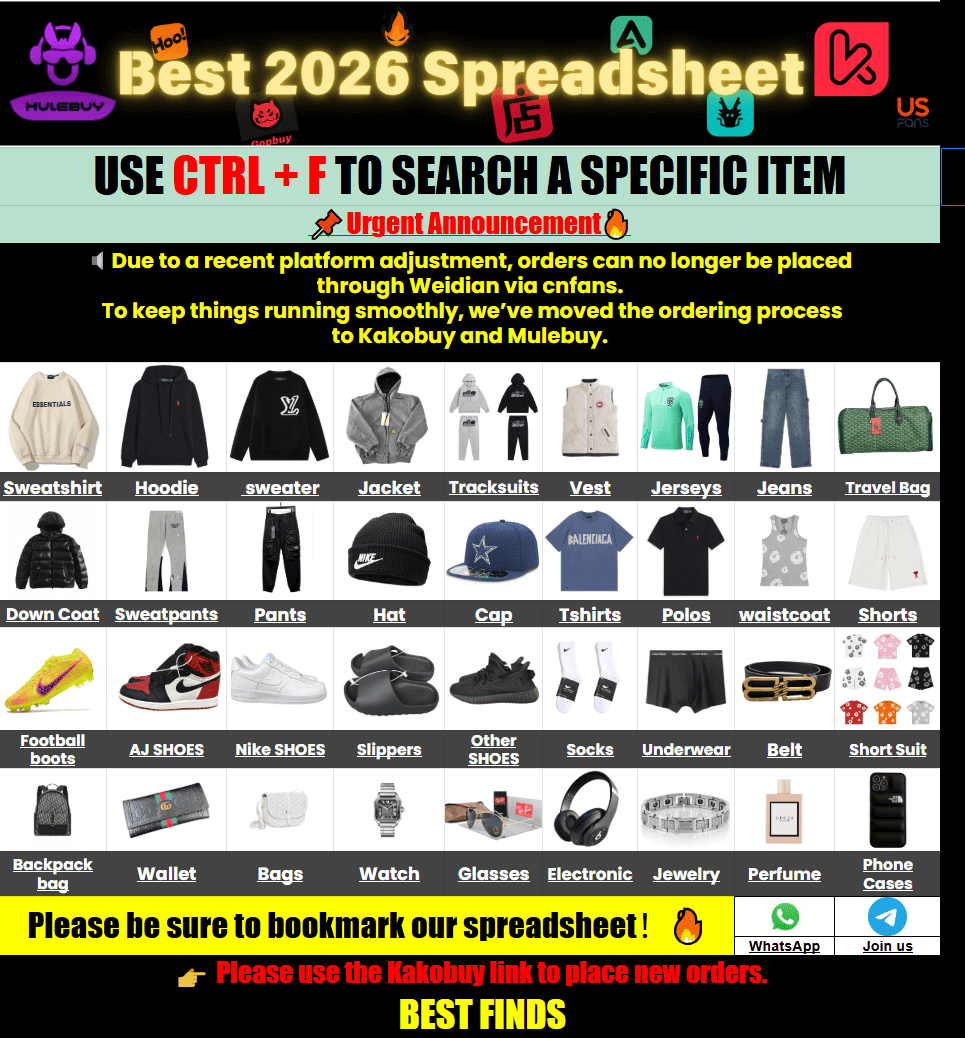
Implementing an HTTP status checker script allows catalog maintainers to isolate broken links automatically. Once flagged, dead links can be redirected to active alternatives or updated versions of the same product. When updating your primary resource index, referencing a consolidated source like the Kakobuy spreadsheet 2026 ensures access to verified alternative links across popular categories.
Tracking Stock Adjustments and Seller Updates
Link health is only part of the maintenance equation; inventory depth is equally critical. A link may load successfully, but if the primary sizing options or colorways are completely sold out, the listing provides little value to prospective buyers.
When monitoring product availability, pay close attention to structural indicators on the underlying listing page:
- Greyed-Out Options: If key sizing options are persistently unavailable, the listing should be flagged as limited stock.
- Presale Indicators: Sellers frequently convert active listings into presale status, extending fulfillment timelines from 3 days to several weeks.
- Tiered Pricing Changes: Platforms like 1688 alter unit pricing based on order volume. Maintaining accurate single-item cost projections requires verifying baseline pricing tiers regularly.
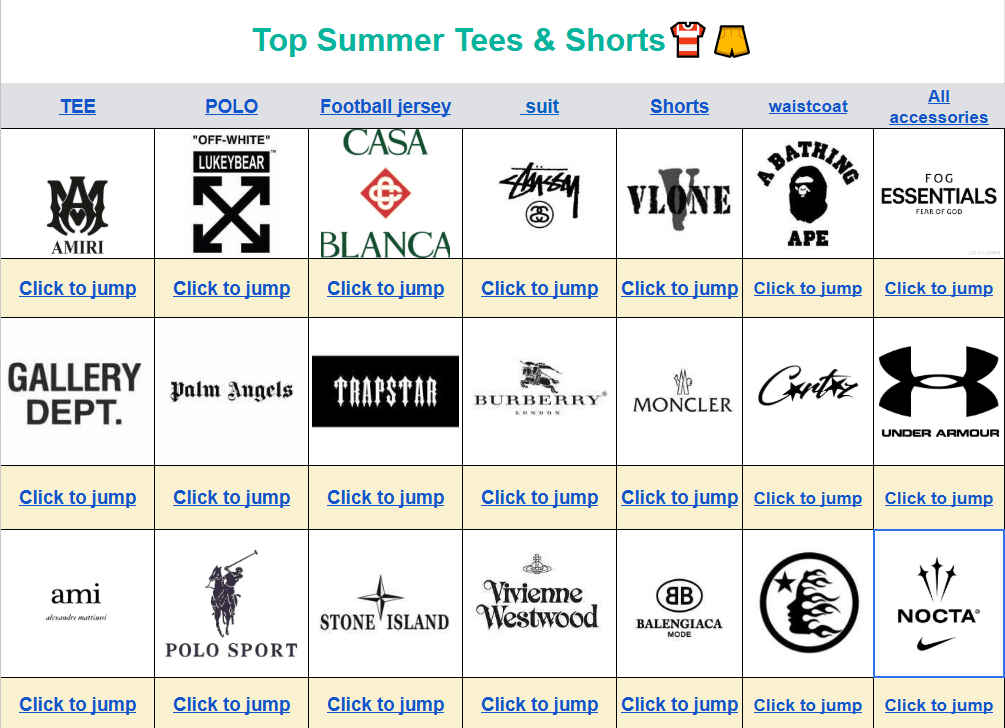
Organizing items by precise categories helps isolate which sections require the most frequent refreshes. For instance, seasonal gear or high-turnover items like Kakobuy Spreadsheet Accessories often require higher refresh frequencies compared to baseline wardrobe essentials due to rapid seller turnover.
Converting Raw Data into Web Catalog Layouts
Traditional Google Spreadsheets become slow and difficult to navigate on mobile devices as row counts climb into the thousands. Converting row-and-column data into an intuitive WooCommerce-style web catalog significantly improves discovery without altering the core purchasing flow.
A web catalog acts as a visual interface layered over the underlying database. Users search, filter, and compare items via structured product cards. Once a buyer selects an item, they review specification notes and click through to an external shopping agent to complete the acquisition. This decoupling of product discovery from transaction processing allows catalog maintainers to fix broken links in the backend without disrupting the browsing experience.
Evaluating Quality and Listing Integrity During Maintenance
Link maintenance provides an ideal opportunity to review product quality indicators. A listing should not remain in a public catalog simply because the link works; it must also meet quality and seller reliability standards.
During routine review checks, catalog editors evaluate visual and technical details to confirm the listing remains a high-value option:
- Stitching and Construction: Reviewing available sample photos for clean seam lines, aligned graphics, and structural symmetry.
- Hardware Quality: Checking zippers, snaps, and buckles on items to ensure durable functional components.
- Material Descriptions: Verifying fabric specifications (e.g., 240 GSM cotton vs. synthetic blends) against seller claims.
- Print & Logo Alignment: Ensuring graphic placements match expected proportions and positions across various garment sizes.
It is important to remember what visual inspection can and cannot confirm. While photos easily reveal visual defects, logo alignment, and basic dimensions, they cannot verify fabric breathability, long-term wear resistance, or exact material composition. Setting realistic expectations around visual QC helps buyers make informed decisions before submitting orders through an agent platform.
Managing Global Sourcing and Logistics Expectations
When organizing listings for a global audience, shipping variables must be factored into catalog structuring. Sourcing requirements differ across regions like North America, Europe, Oceania, and Asia-Pacific. A well-maintained catalog helps users anticipate logistics costs alongside product prices.
Key regional factors to keep in mind when organizing product records include:
- Volumetric vs. Actual Weight: Bulky items (such as outerwear or heavy footwear) incur higher shipping fees based on package volume rather than dead weight.
- Customs and Tax Declarations: European shoppers frequently rely on IOSS or DDP (Delivered Duty Paid) shipping routes to streamline tax handling, whereas Australian buyers operate under distinct GST rules.
- Destination Restrictions: Certain items containing batteries, liquids, or brand-adjacent designs may require specialized shipping lines depending on national import guidelines.
Providing clear weight estimates and dimensional guidance within product descriptions allows international shoppers to calculate total landed costs accurately prior to transferring funds to their chosen shopping agent.
Frequently Asked Questions
Q: How often are links updated in the Kakobuy catalog system?
A: Automated scripts check link availability on a daily basis to flag 404 errors, while manual inventory and pricing reviews are conducted on a weekly schedule across major categories.
Q: What happens when a product link goes out of stock entirely?
A: If a seller completely removes a listing or discontinues production, catalog managers locate an equivalent alternative listing from a verified seller with comparable quality metrics before removing the broken link.
Q: Why does the catalog redirect to external purchasing agents instead of selling directly?
A: The website serves purely as a discovery, index, and comparison platform. External shopping agents handle warehouse inspection, international consolidation, and shipping logistics.
Q: Can I submit broken links or updated product URLs for repair?
A: Yes, community inputs help accelerate daily maintenance. Users can flag expired listings directly on product pages to alert catalog editors to necessary updates.
Q: Do price updates on the original platform reflect immediately on the catalog web interface?
A: System updates process periodically throughout the day. While most price adjustments sync within 24 hours, buyers should always confirm final pricing on the external agent landing page prior to ordering.
Maintaining a reliable product directory requires balancing automated link validation, inventory monitoring, and realistic quality standards. Transitioning from complex, slow-loading spreadsheets to a dedicated web catalog provides global shoppers with a fast, organized, and up-to-date discovery portal.