
Why Busy Shopping Seasons Make Product Research Slower
Busy shopping seasons create a familiar problem: there are more products to compare, more links to check, and less time to decide. Learning how to save time with Kakobuy spreadsheets is mainly about reducing unnecessary browsing rather than rushing through important checks. A well-organized spreadsheet-based catalog can help shoppers move from discovery to comparison much faster, particularly when a large number of listings are competing for attention.
The biggest advantage is not simply having more products in one place. It is being able to narrow a large sourcing list into a small group of realistic options, inspect the information that matters, and postpone detailed QC decisions until after the shortlist is under control.
This workflow becomes especially useful around major seasonal shopping periods, when popular listings can attract attention quickly and shoppers may be researching several categories at the same time.
Smart Search Tip: Looking for more? To find items instantly, use single-word keywords (e.g., “SHOES” or “T-SHIRT”) instead of long sentences for the best results.
Table of Contents
- Why Busy Shopping Seasons Make Product Research Slower
- The Fastest Way to Turn a Large List Into a Shortlist
- Which Product Details Should You Check First?
- Use QC Information as a Filter, Not a Final Verdict
- A Faster Workflow for Measurements and Specifications
- How to Plan Around International Shipping
- A 15-Minute Shopping Workflow for Peak Seasons
- Common Time-Wasting Mistakes
- FAQ
The Fastest Way to Turn a Large List Into a Shortlist
During a quiet shopping period, it is easy to open dozens of product pages one after another. During a busy season, that approach quickly becomes inefficient. The better method is to treat the spreadsheet as a discovery layer and use a staged filtering process.
Start with the broad category you actually want. If you are looking for seasonal clothing, for example, do not immediately compare every listing that appears. First separate products by type, intended use, visible design, and approximate price range. Only then should you spend time examining detailed photos or seller specifications.
A useful workflow looks like this:
- Search broadly: identify several potentially suitable listings.
- Remove obvious mismatches: eliminate the wrong category, style, sizing range, or specifications.
- Compare the remaining listings: look at measurements, materials stated by the seller, photos, and available purchasing information.
- Review QC information: inspect available images for visible issues.
- Create a final shortlist: keep only the options worth considering for an order.
This prevents a common mistake: spending five minutes analyzing a product that should have been rejected after the first thirty seconds.
The web catalog can also be useful when you want to browse by category instead of repeatedly opening a large spreadsheet. For example, shoppers interested in coordinated clothing can move directly into Kakobuy Spreadsheet Sets rather than manually searching through unrelated entries.
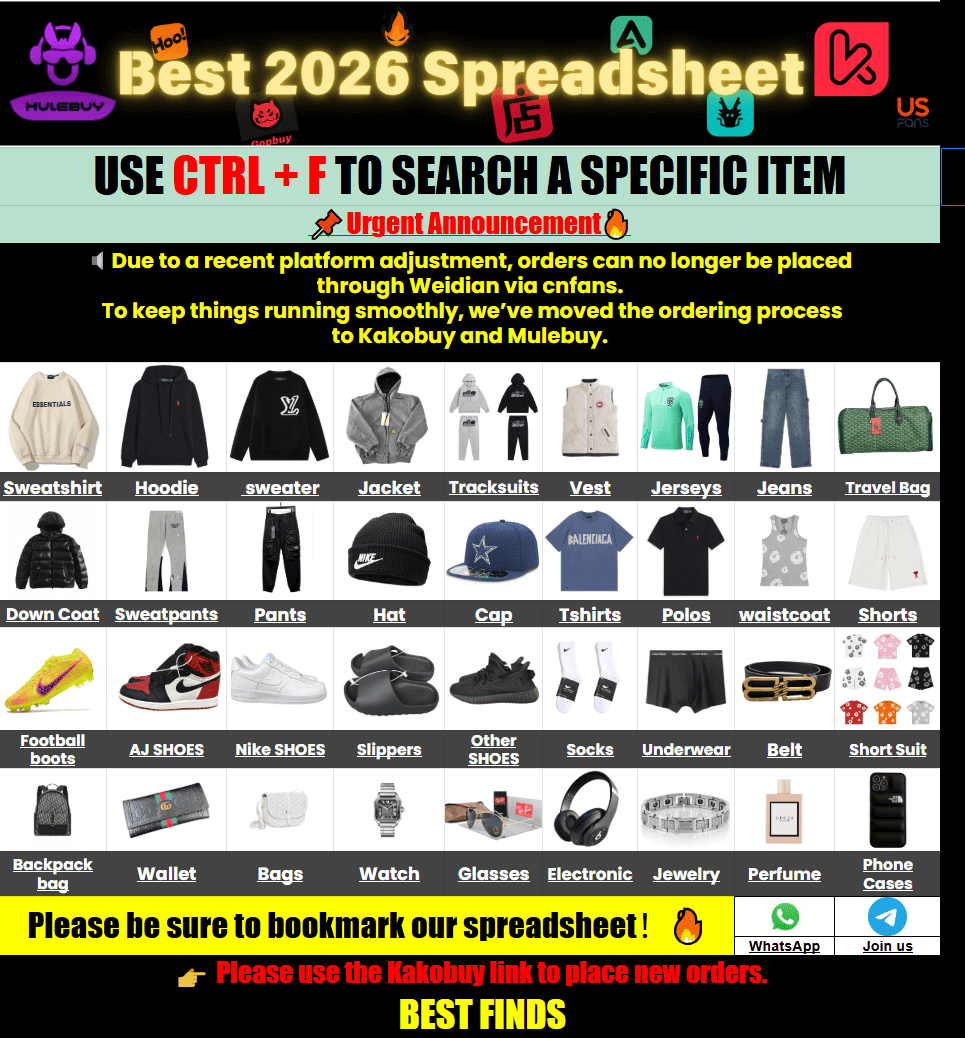
The goal is not to inspect fewer products blindly. It is to spend detailed research time only on products that have already passed a basic relevance check.
Which Product Details Should You Check First?
Not every piece of information deserves equal attention. When time is limited, prioritize details that can immediately change your decision.
| Information | What to Check | Why It Saves Time |
|---|---|---|
| Product type | Confirm the listing actually matches the intended item | Removes irrelevant results early |
| Measurements | Compare seller dimensions with your preferred measurements | Reduces avoidable sizing mistakes |
| Product photos | Look at shape, visible construction, graphics and hardware | Reveals obvious issues before deeper research |
| Seller specifications | Check stated material, dimensions, weight or other measurable details | Creates a more useful comparison between listings |
| Available QC images | Look for visible inconsistencies or defects | Helps decide which listings deserve further attention |
A practical rule is to identify your three non-negotiable requirements before opening product pages. For one shopper, that might be measurements, color and overall construction. For another, it could be product weight, dimensions and a specific design feature.
Having those requirements in advance prevents endless browsing based on small differences that ultimately do not matter.
This is also where a curated catalog can be more convenient than a raw spreadsheet. Instead of treating every row as equally important, shoppers can use categories and product information to build a working shortlist.
This isn’t just a spreadsheet—it’s a Live Supply Chain Index. We aggregate real-time data from Taobao, Weidian, and 1688, filtered through rigorous community quality benchmarks to help you discover only the “best-in-class” options. For easier access to Taobao listings, you can also use our Taobao link converter to quickly convert and work with product links.
Use QC Information as a Filter, Not a Final Verdict
QC information becomes particularly valuable when shopping quickly, but it should be interpreted realistically. Product photographs can reveal many visible details, yet they cannot answer every quality question.
When reviewing available QC photos, concentrate on things that are actually visible:
- stitching that appears uneven, loose or inconsistent;
- visible defects, marks or damage;
- graphic or print alignment;
- color consistency across different parts of the product;
- symmetry and overall shape;
- zippers, buttons, buckles and other visible hardware;
- tags and labels where they are relevant to the product;
- for footwear, visible sole construction and overall symmetry.
Do not treat photographs as proof of fabric composition, long-term durability, chemical composition, comfort over months of use, or other characteristics that cannot be established visually.
The most efficient approach is to use QC as a decision filter. If the available images reveal an obvious problem, there is little reason to continue researching that listing. If everything visible looks acceptable, the product can remain on the shortlist while you consider measurements, seller information and ordering requirements.
A Faster Workflow for Measurements and Specifications
Sizing is one of the easiest areas to lose time because familiar retail labels do not always translate cleanly between manufacturers. A medium from one seller may have substantially different dimensions from a medium elsewhere.
For clothing, prioritize actual measurements such as:
- chest or bust width;
- garment length;
- shoulder width;
- sleeve length;
- waist;
- hip measurement.
For shoes, foot length and available insole measurements are generally more useful than relying solely on US, UK or EU size labels.
Accessories may require different measurements, including circumference, overall length, width, product weight or hardware dimensions.
Instead of opening every listing in detail, identify your target measurements first. Then eliminate products outside the acceptable range. This turns sizing from a subjective browsing exercise into a measurable screening step.
For shoppers preparing a larger seasonal order, keeping a small personal reference list of preferred measurements can save considerable time. It also makes comparisons between different manufacturers much more consistent.
How to Plan Around International Shipping
Saving research time is useful only if the final purchasing workflow remains practical. International shoppers should therefore consider shipping before committing to a large shortlist.
Shipping decisions can depend on destination, parcel characteristics, available routes and the rules of the destination country. The US, UK, EU member states, Australia, New Zealand and other markets can have different tax, customs and import requirements, so there is no universal shipping rule that applies to every order.
For busy seasons, three questions are especially useful:
- How urgent is the delivery? A seasonal item may have little value if it arrives after the event or intended period of use.
- How large is the planned parcel? Package weight and dimensions can affect shipping calculations.
- What destination rules apply? Check current customs, VAT/GST, restricted-product and biosecurity guidance for your country.
Do not assume that the cheapest visible shipping option is automatically the best choice. A slightly different service may offer a more appropriate balance between cost, tracking, delivery expectations and handling requirements.
For EU buyers, tax and customs treatment can vary according to the shipment and current regulations. UK, Australian and New Zealand shoppers should likewise check the rules applicable to their destination rather than relying on an outdated threshold or shipping claim found in an old guide.
The most important time-saving tactic is simple: decide your acceptable delivery window before building a large order.
A 15-Minute Shopping Workflow for Peak Seasons
If you are short on time, a structured session can be more productive than an open-ended browsing session.
Minutes 1–3: Define the target
Choose the category, approximate budget, required size or dimensions, and two or three features that matter most.
Minutes 4–7: Build the shortlist
Use short search terms and scan the catalog for relevant listings. Save only products that clearly meet your basic requirements. Avoid opening every result.
Minutes 8–11: Inspect product information
Compare measurements, visible specifications, photos and seller-provided information. Remove products that introduce obvious uncertainty or fail your requirements.
Minutes 12–14: Perform a QC-focused review
Look for visible construction issues, alignment problems, inconsistent colors, hardware defects and other details that can realistically be evaluated from available images.
Minute 15: Make the next decision
You should now have a small group of candidates rather than a browser full of open tabs. Decide whether each candidate deserves further checking, should be held for later, or can be removed.
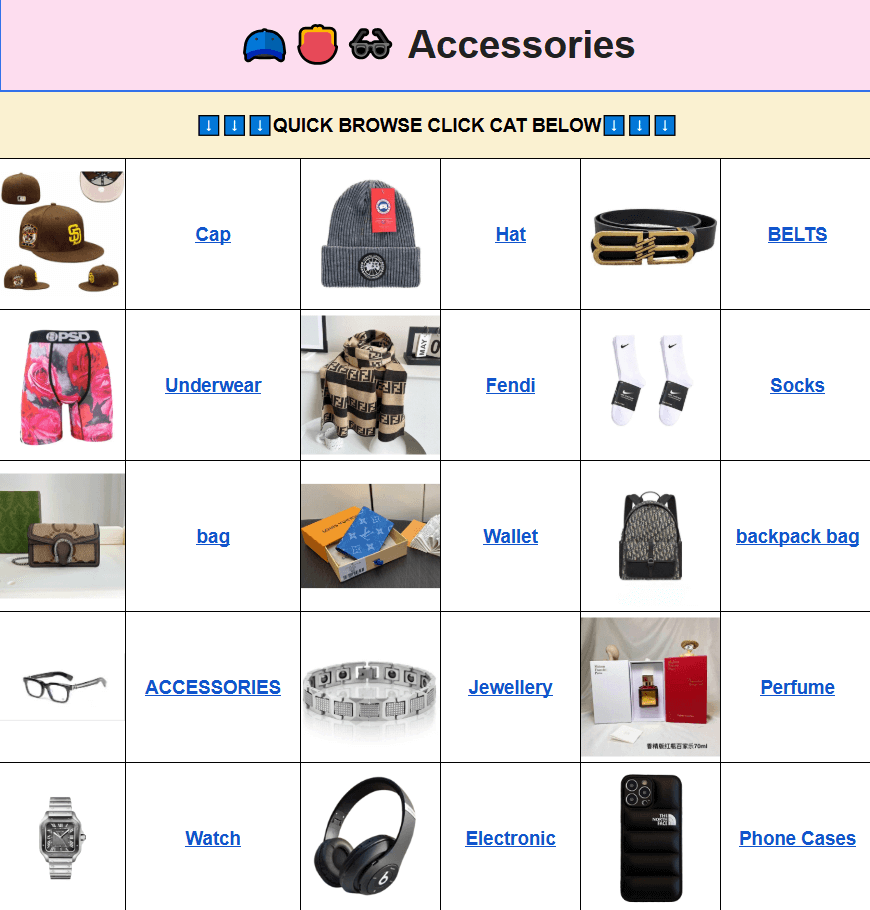
For broader discovery, the Kako buy spreadsheet homepage can serve as the starting point before narrowing into specific products and categories.
Common Time-Wasting Mistakes
Comparing too many nearly identical listings
Once several products satisfy your basic requirements, additional comparison often produces diminishing returns. Keep a small shortlist and compare meaningful differences rather than every minor visual variation.
Using retail size labels as the main sizing method
Labels such as S, M, L and XL are not standardized across manufacturers. Actual measurements should carry more weight in the decision.
Inspecting QC details before confirming basic suitability
There is little value in spending several minutes studying stitching on a product that does not meet your required dimensions or intended use.
Ignoring parcel planning until the end
A seasonal shopping plan should account for the destination and expected delivery window early enough to avoid unnecessary last-minute decisions.
Keeping every interesting product
A shortlist should be selective. If ten products meet the same need, identify the strongest few instead of carrying all ten through every stage of the process.
FAQ
Q: What is the biggest time-saving advantage of a Kakobuy spreadsheet?
A: The main advantage is faster discovery. A structured product catalog can reduce the amount of manual searching needed to identify relevant listings, leaving more time for comparison and QC review.
Q: Should I inspect QC photos for every product?
A: Not necessarily. First remove listings that fail your basic requirements. Then use available QC information on the smaller group that remains.
Q: Can I rely on S, M, L or XL when shopping quickly?
A: It is safer to compare manufacturer dimensions or actual measurements. Size labels can vary considerably between sellers and product batches.
Q: What should I prioritize during a busy shopping season?
A: Start with the product type, required measurements, budget and must-have features. After that, review visible quality indicators and shipping practicality.
Q: Do QC photos prove that a product is durable?
A: No. Photos can help identify visible construction issues and defects, but they cannot reliably establish long-term durability, comfort or material performance.
Q: Should international shoppers consider shipping before building a shortlist?
A: Yes. Your destination, parcel characteristics and delivery window can affect which options make practical sense. Customs, VAT/GST and other import requirements also vary by destination.
Q: How can I avoid spending an hour browsing?
A: Set a fixed shortlist size, use short search terms, eliminate unsuitable products early, and reserve detailed QC analysis for your strongest candidates. The objective is to reduce decisions, not simply browse faster.
Make the Spreadsheet Work Like a Filter
The most effective way to save time with a large product spreadsheet is to stop treating it as a list that must be read from top to bottom. Use it as a filtering system: search narrowly, remove obvious mismatches, compare measurable specifications, review realistic QC signals, and consider shipping before the final decision.
That approach becomes especially valuable during busy shopping seasons because it protects the time that actually matters—the time spent deciding between a few suitable options rather than scrolling through hundreds of possibilities.