
Smart Search Tip: Looking for more? To find items instantly, use single-word keywords (e.g., “SHOES” or “T-SHIRT”) instead of long sentences for the best results.
Table of Contents
- The Comparison at a Glance
- What Makes These Market Hubs Different?
- Search, Product Data, and Browsing Efficiency
- How to Evaluate Listings Before Ordering
- QC Photos, Measurements, and Product Specifications
- Costs, Shipping, and International Ordering
- A Practical Workflow for Comparing Finds
- Frequently Asked Questions
The Comparison at a Glance
The most important distinction is between a product-discovery catalog, an original marketplace, and an external shopping agent. They may all contain links to Chinese-marketplace products, but they do not necessarily provide the same information or perform the same job.
| Comparison factor | Kakobuy spreadsheet catalog | Original market hubs | Shopping agents |
|---|---|---|---|
| Main purpose | Discover and compare sourcing listings | Browse marketplace products and sellers | Assist with purchasing and fulfillment |
| Browsing format | Organized web-based catalog | Marketplace search and seller pages | Agent search, pasted links, or supported product pages |
| Product discovery | Useful for filtered collections and curated categories | Broad inventory and seller discovery | Depends on the platform and supported sources |
| QC information | May display available sourcing or QC-related information | Depends on seller listings and marketplace information | May provide purchasing-stage inspection services |
| Checkout | Redirects users to an external ordering platform | Depends on marketplace and seller arrangements | Typically handles ordering and shipment services |
| International shipping | Requires checking the external ordering platform | Depends on seller and destination arrangements | Usually provides the relevant shipping options and calculations |
This is a functional comparison rather than a claim that one platform is universally better. Inventory, seller information, supported marketplaces, and available services can change. A catalog may be excellent for finding a product but may not be the right place to calculate the final landed cost.
What Makes These Market Hubs Different?
1. Kakobuy spreadsheet catalogs: a discovery-first approach
A spreadsheet-based catalog is designed to turn a large collection of product links into a more manageable browsing experience. Instead of opening rows in a conventional spreadsheet, users can move through product pages, categories, and search results.
That structure is particularly useful when you already know the type of item you want but do not yet know which seller or listing deserves closer attention. For example, someone looking for athletic footwear can begin with a dedicated shoe category, compare several listings, and then inspect the available product details before moving to an external agent.
The key limitation is that a catalog should not be confused with the original seller or ordering platform. Product availability, current prices, seller terms, and shipping options must be checked through the relevant external source before a purchase.
2. Original marketplaces: broader seller and listing context
Marketplaces such as Taobao, Weidian, and 1688 provide the underlying seller and product-listing environment. They can offer a much wider range of products, seller histories, variants, descriptions, and transaction information. However, browsing may involve Chinese-language interfaces, unfamiliar measurement conventions, repeated listings, and links that are difficult to organize.
For experienced sourcing users, the original marketplace can be valuable when a precise seller, product variation, or listing detail matters. For discovery, however, a structured catalog may make the first stage less time-consuming.
3. Shopping agents: the ordering and fulfillment layer
A shopping agent is not simply another product directory. Depending on its services, it may help users purchase products from supported marketplaces, receive goods in a warehouse, provide inspection photographs, consolidate parcels, and arrange international shipping.
That makes the agent relevant after product discovery. The agent’s supported marketplaces, service charges, warehouse policies, refund procedures, and shipping routes can materially affect the final decision.
Search, Product Data, and Browsing Efficiency
The practical advantage of a web catalog is not that every listing is automatically superior. It is that product discovery can become easier to organize. Search filters, categories, product cards, and readable listing pages help users narrow a large set of possibilities before they begin detailed checks.
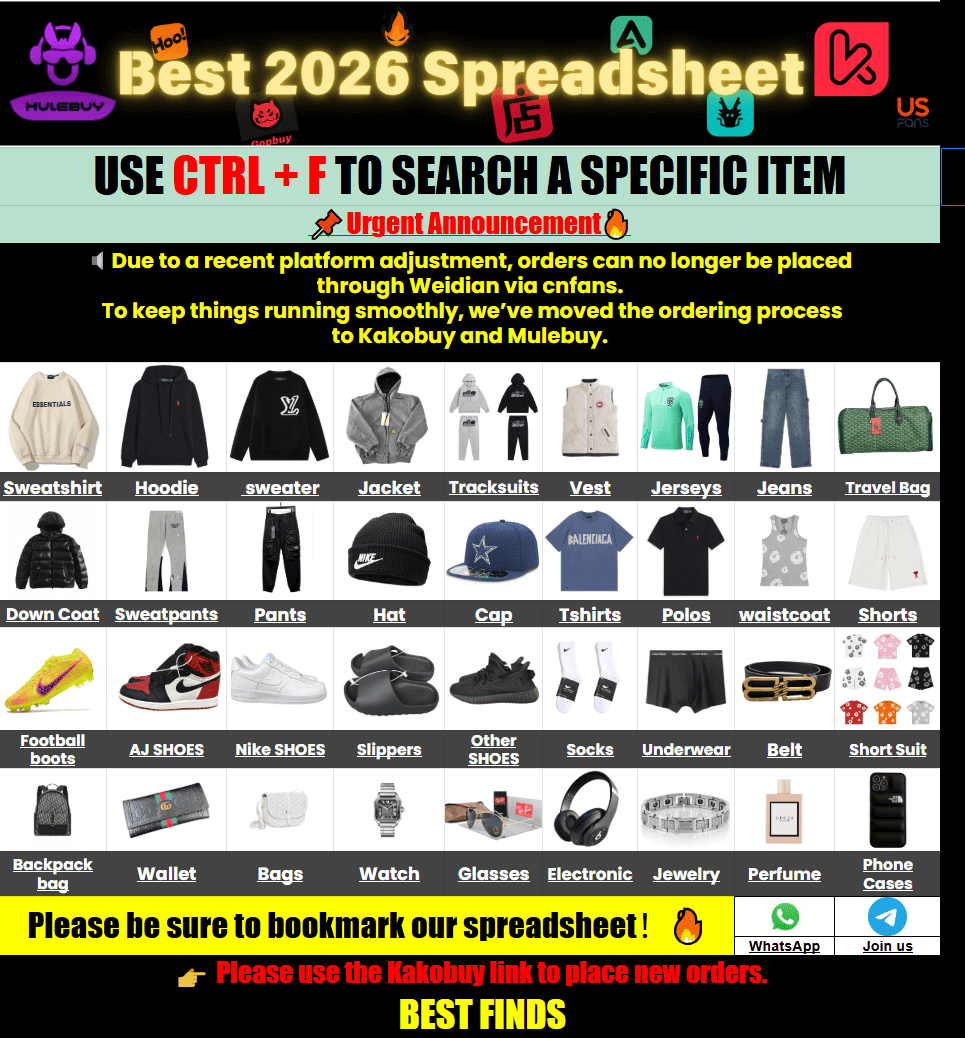
What should you compare in the search interface?
- Category clarity: Can you reach the relevant product type without searching through unrelated entries?
- Search behavior: Does the search work well with short, specific terms, and does it return useful results?
- Listing consistency: Are titles, images, seller links, and product descriptions presented in a reasonably consistent way?
- Page performance: Can the catalog load and navigate comfortably on your phone or desktop?
- Product-page detail: Can you identify the seller source, available variants, and relevant specifications before leaving the page?
A fast interface is helpful, but speed alone is not evidence of product quality or seller reliability. A page that loads quickly but lacks measurements, variant details, or a usable source link may still create unnecessary work later.
For users who want to browse a wider selection, the Kakobuy spreadsheet best catalog can serve as a starting point for discovering organized product collections. The next step should always be to inspect the actual listing and confirm whether the information is current.
When an original marketplace is the better choice
Go directly to the original marketplace when you need to investigate a particular seller, compare multiple listings of the same item, read the full seller description, or check information that a catalog does not reproduce. This is especially important for products with many variants or specifications that are not obvious from photographs.
A sensible comparison process uses the catalog for discovery and the original source for verification, rather than treating either one as a complete substitute for the other.
How to Evaluate Listings Before Ordering
A product title and attractive photograph are only the beginning. When comparing market hubs, examine the information available for each listing and distinguish between what is documented and what remains uncertain.
Product information worth recording
- Original seller or marketplace link.
- Product title and relevant model or style description.
- Available colors, sizes, and other selectable variants.
- Seller-provided dimensions or technical specifications.
- Displayed price, currency, and any applicable options or fees.
- Product images, including close-ups where available.
- Any stated material, construction, or care information.
- Availability and whether the listing appears current.
One common mistake is to compare two products only by their main photographs. A lower-priced listing may have fewer included components, different dimensions, or a different version of the item. A higher price does not automatically establish better quality either. Compare what is actually included and what the seller documents.
Example: comparing a shoe listing
Suppose two listings show similar low-top sneakers. Before selecting one, compare the outsole design, upper material description, size chart, available colorways, seller photographs, and the original source links. If one listing provides a detailed size chart while the other only displays generic sizes, the first may be easier to evaluate accurately.
For a closer look at footwear collections, the Kakobuy Spreadsheet Shoes category is a relevant starting point. It can help narrow discovery, but the final choice still depends on the specific listing and the information available from the seller or ordering platform.
QC Photos, Measurements, and Product Specifications
Quality-control information is one of the most important differences between simply finding a product and preparing to order it. A listing photograph may show the intended design, while a later inspection photograph may reveal the actual item received by an agent’s warehouse. These are different stages of the process.
What QC photographs can realistically show
When inspection photographs are available, they may help you examine visible stitching, color consistency, shape, print placement, logos or graphics, hardware, zippers, tags, labels, and obvious damage. For shoes, useful views may include the outsole, toe shape, heel construction, and overall symmetry.
Photos cannot reliably establish every property. They generally cannot prove fabric composition, long-term durability, chemical composition, authenticity, or how comfortable an item will remain after extended use. A photo may also fail to reveal defects hidden inside a product or problems that appear only during use.
| Product type | Useful measurable checks | Visual QC checkpoints |
|---|---|---|
| Shoes | Foot length, insole length, outsole dimensions where relevant | Outsole construction, symmetry, stitching, visible glue, shape |
| T-shirts and tops | Chest width, garment length, shoulder width, sleeve length | Print alignment, collar shape, seams, color consistency |
| Jackets | Chest width, body length, shoulder width, sleeve length | Zippers, hardware, lining visibility, seam construction |
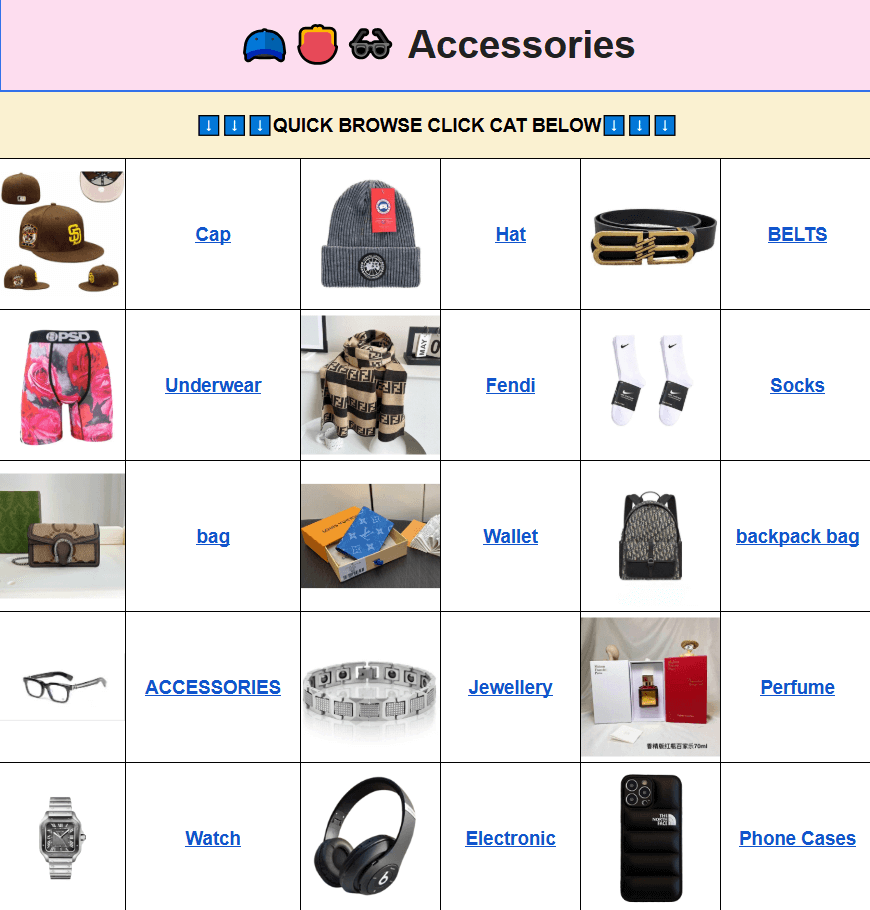
| Accessories | Dimensions, weight, strap length, compartment measurements | Edges, fasteners, surface finish, hardware alignment |
Why measurements matter more than familiar size labels
Clothing sizes vary between manufacturers, product cuts, and batches. A medium in one listing may not match a medium in another. For shoes, the stated size may also require comparison with foot length and the seller’s insole measurements.
The safer approach is to measure a comparable item you already own, then compare those measurements with the seller’s chart. Check whether the listed dimensions refer to the garment, the foot, the insole, or another reference point. If the information is missing or contradictory, treat the uncertainty as part of the purchasing decision rather than assuming the item will fit.
Costs, Shipping, and International Ordering
Market-hub comparisons often focus on the displayed product price, but international buyers need to think in terms of the total cost of obtaining the item. A catalog may show a product price or sourcing link without providing the final shipping quote or import charges.
Separate the main cost components
- Product cost: The price of the selected listing and variant.
- Domestic or agent-related charges: Any applicable purchasing, handling, storage, or service fees.
- International shipping: The amount charged to move the parcel to the destination.
- Packaging and parcel dimensions: These may affect the shipping calculation, including where volumetric weight is used.
- Taxes and customs charges: These depend on the destination, product classification, declared information, and applicable local rules.
For buyers in the United States, Canada, the United Kingdom, the EU, Australia, New Zealand, and other destinations, the relevant customs and tax treatment may differ. Do not assume that a shipping method offered to one country will be available to another. Check the current guidance for your destination and confirm whether the ordering platform uses DDP, DDU, or another arrangement.
Why shipping terms should be checked late in the process
The final shipping amount may depend on the packed parcel rather than the initial product listing. A bulky jacket, shoe box, or multi-item parcel may have different shipping implications from a lightweight accessory. Storage periods, parcel consolidation, restricted items, and carrier availability may also affect the decision.
A useful comparison is therefore not simply “Which market hub has the lowest listed price?” It is “Which option gives me enough information to estimate the complete cost and understand the ordering conditions?”
A Practical Workflow for Comparing Finds
Use the following sequence when evaluating a product discovered through a catalog or another market hub:
- Start with the product category. Narrow the search to the type of item you actually want.
- Shortlist several listings. Record the source link, displayed price, product options, and available specifications.
- Compare the original sources. Check whether the seller information and variants match the catalog entry.
- Review sizing and construction details. Use actual measurements and visible product information rather than relying on a familiar size label.
- Check available QC information. Determine what can be inspected before shipment and what cannot be confirmed from photographs.
- Estimate the full cost. Include product price, relevant service charges, shipping, and possible destination taxes or duties.
- Confirm the external ordering process. Review supported marketplaces, payment requirements, refund conditions, and shipping terms before proceeding.
This workflow separates discovery from verification and ordering. It also makes it easier to identify where information is missing. If a product looks attractive but its dimensions, source, or shipping conditions are unclear, the correct next step is to investigate—not to infer that the listing is a good choice.
Frequently Asked Questions
Q: What is the main advantage of a Kakobuy spreadsheet catalog over a traditional Google Spreadsheet?
A: A web-based catalog can make product discovery easier through organized categories, search, product pages, and a more structured browsing experience. It does not eliminate the need to verify seller information or ordering terms.
Q: Are original marketplaces better than product catalogs?
A: They serve different purposes. Original marketplaces are useful for detailed seller and listing research, while catalogs can simplify discovery and comparison. The best choice depends on which stage of sourcing you are handling.
Q: Can QC photos confirm that a product is durable?
A: No. QC photos can reveal certain visible characteristics and defects, but they cannot reliably prove long-term durability, material composition, or performance after repeated use.
Q: Should I compare clothing by S, M, L, or XL?
A: Use those labels only as a starting point. Compare seller-provided measurements with a garment you already own because sizing systems and cuts vary across manufacturers and batches.
Q: Does a product catalog include the final international shipping price?
A: Not necessarily. The external ordering platform may calculate shipping after the product is purchased, received, weighed, and packed. Confirm the available routes, fees, and destination rules before ordering.
Q: What should I do if a catalog listing and its original seller page differ?
A: Treat the original source and current seller information as the items to investigate. Check the exact variant, price, images, and specifications. If the difference cannot be explained, choose a listing with clearer information or seek clarification through the relevant platform.
Comparing market hubs works best when each platform is evaluated according to its actual role. A structured Kakobuy catalog can make discovery more manageable, original marketplaces can provide deeper seller context, and shopping agents can handle the ordering and international fulfillment stage. Keeping those functions separate helps you make sourcing decisions based on documented information rather than assumptions.