
This isn’t just a spreadsheet—it’s a Live Supply Chain Index. We aggregate real-time data from Taobao, Weidian, and 1688, filtered through rigorous community quality benchmarks to help you discover only the “best-in-class” options.
Smart Search Tip: Looking for more? To find items instantly, use single-word keywords (e.g., “SHOES” or “T-SHIRT”) instead of long sentences for the best results.
Table of Contents
- What QC Photos Actually Tell You
- How to Find and Review the Right Listing
- The Photo-by-Photo Inspection Checklist
- Measurements, Sizing, and Product Specifications
- Special Checks for Shoes and Accessories
- When to Accept, Question, or Reject an Item
- What Changes Before International Shipping?
- Frequently Asked Questions
What QC Photos Actually Tell You
Quality-control photos are warehouse images taken after a product has been purchased through a sourcing process and received for inspection. Depending on the service and inspection package, the images may show the front, back, sides, sole, interior, labels, packaging, or close-up details.
Their value is simple: they let you compare the physical item shown in the warehouse with the listing information before you authorize the next step. A product photograph from a seller may be carefully composed, heavily edited, or limited to one attractive angle. A warehouse image can reveal a different set of details, although its usefulness depends on lighting, resolution, camera angle, and the number of photographs provided.
QC photos can help you evaluate:
- Visible stitching irregularities, loose threads, and uneven seams.
- Logo, graphic, or print placement compared with the listing.
- Color appearance, shape, symmetry, and obvious surface marks.
- Labels, tags, zippers, buttons, buckles, and other visible hardware.
- Measurements when a ruler or measurement reference is included.
- Whether the received item appears to match the selected color, size, and product variation.
They cannot establish fabric composition, chemical safety, long-term durability, exact material quality, future comfort, or guaranteed authenticity. Even a sharp image cannot reveal how a garment will feel after repeated washing or how a sole will perform after months of use. Treat QC images as evidence for a limited inspection, not as a laboratory report or a guarantee.
How to Find and Review the Right Listing
Begin with a clear product reference rather than browsing solely by attractive photographs. The Kako buy spreadsheet 2026 catalog is designed to make spreadsheet-based sourcing information easier to browse through product pages and categories. It can help you narrow your search, compare available listings, and locate the underlying seller information needed for further checking.
Once you open a product page, record the details that define the item you are evaluating:
- Product name and seller-provided description.
- Available colors, sizes, and other selectable variations.
- Seller photographs and any stated dimensions.
- Source link or product identifier.
- Whether QC images are available and what they actually show.
Do not assume that two products with similar names are identical. Different batches, sellers, or production periods may have different measurements, materials, colors, and construction details. A useful comparison starts with the exact listing and selected variation.
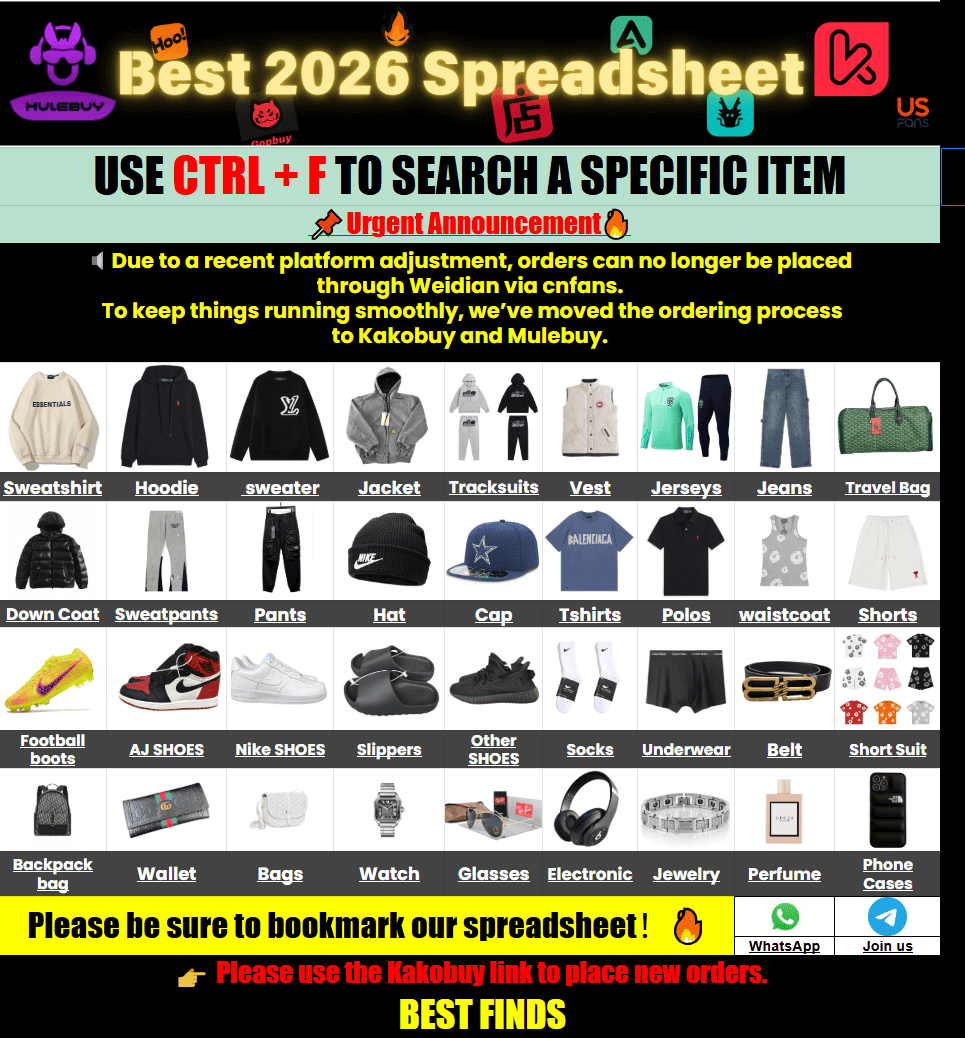
For example, if you are comparing footwear, browse the Kakobuy Spreadsheet Shoes category and identify the specific product you want to investigate. The category helps with discovery, but the actual QC assessment must be based on the individual item and its warehouse photographs.
The Photo-by-Photo Inspection Checklist
A good inspection is easier when you review the images in a consistent order. Instead of zooming in randomly and reacting to every small imperfection, start with the overall shape and work toward specific construction details.
1. Start with the overall silhouette
Look at the front, back, and side views. Does the item have the general shape shown in the listing? For clothing, examine the shoulder line, body proportions, sleeve shape, and drape. For bags or other structured accessories, inspect the overall profile and whether the item appears distorted or collapsed.
Minor differences caused by folding, packaging, or camera perspective are not necessarily defects. However, an obvious asymmetry, incorrect panel shape, or visibly different design is worth documenting before you proceed.
2. Examine stitching and seams
Zoom into areas where several panels meet. Check whether the stitching appears reasonably straight and consistent, whether threads are loose, and whether seams appear to be separating. Pay particular attention to stress points such as pockets, straps, cuffs, handles, and corners.
A single loose thread does not automatically mean the entire product is poorly made. The more useful question is whether the issue is isolated, repeated across multiple seams, or located in a part that carries significant tension.
3. Check graphics, logos, and labels
Compare visible graphics with the seller’s listing photographs. Look for obvious differences in position, alignment, spelling, color, and print boundaries. On garments, inspect neck labels, wash labels, size tags, and printed artwork when the photos provide a clear view.
These checks can identify inconsistencies between the ordered item and the listing. They cannot prove that a branded product is genuine. A visually accurate logo or label is not evidence of authenticity, and buyers should not treat QC images as a substitute for authorized-brand verification.
4. Review material appearance and hardware
Look for visible creases, scratches, stains, discoloration, uneven texture, or damaged surfaces. For zippers, buttons, buckles, and other hardware, inspect whether parts appear attached correctly and whether there are obvious breaks or missing pieces.
Lighting can change the apparent color and texture of a product. If the item looks substantially different from the selected color in the listing, request clarification or additional images rather than relying on a single photograph.
| QC checkpoint | What the photo may reveal | What it cannot establish |
|---|---|---|
| Stitching | Loose threads, uneven seams, visible separation | Long-term seam durability |
| Material appearance | Surface marks, texture, visible thickness differences | Exact fiber content or chemical composition |
| Graphics and labels | Placement, spelling, alignment, visible damage | Authenticity or trademark authorization |
| Hardware | Missing, broken, or visibly misaligned components | Long-term performance or corrosion resistance |
| Shape and symmetry | Obvious distortion or uneven construction | How the item will recover after unpacking |
Measurements, Sizing, and Product Specifications
One of the most useful parts of a QC inspection is checking measurements rather than relying on a familiar retail size. Manufacturer sizing systems vary, and a label such as M, L, or XL does not provide a universal fit across sellers or batches.
For clothing, compare the listing’s dimensions with a garment you already own and understand. Relevant measurements may include:
- Chest width measured across the garment.
- Shoulder width.
- Sleeve length.
- Overall garment length.
- Waist and hip measurements for trousers or shorts.
Ask how the measurement was taken if the method is unclear. Chest width measured flat is not the same as a full chest circumference. A measurement taken from the outer edge of a garment may differ from one taken along an interior seam.
For footwear, foot length and insole length are useful reference points, but they are not interchangeable. A shoe’s internal shape, toe box, width, and construction can affect fit even when the insole measurement appears suitable. If the QC photos include a ruler, compare the visible measurement with the seller’s size chart and the dimensions you need.
For bags and accessories, check dimensions such as length, height, width, strap length, and hardware placement. A listed capacity may be less useful than the actual opening and interior dimensions if you need to carry a particular device or item.
When the photographs do not show a clear measurement, do not infer one from the image scale. Request a measurement or use the available product specifications, recognizing that measurement methods can introduce small differences.
Special Checks for Shoes and Accessories
Shoes and accessories deserve a more targeted inspection because their construction often includes components that are difficult to assess from a single front-facing image.
Footwear
Inspect the toe shape, side profile, heel alignment, outsole edges, stitching, and visible bonding. Look for obvious separation between the sole and upper, uneven panel placement, damaged eyelets, or mismatched left and right shoes. If both shoes are shown, compare their symmetry and overall shape.
For sneakers, sole construction and visible tread can be examined photographically, but the images cannot establish grip, cushioning performance, or durability. A clean-looking outsole is not proof that the shoe will perform well in every weather condition.
Bags, belts, wallets, and other accessories
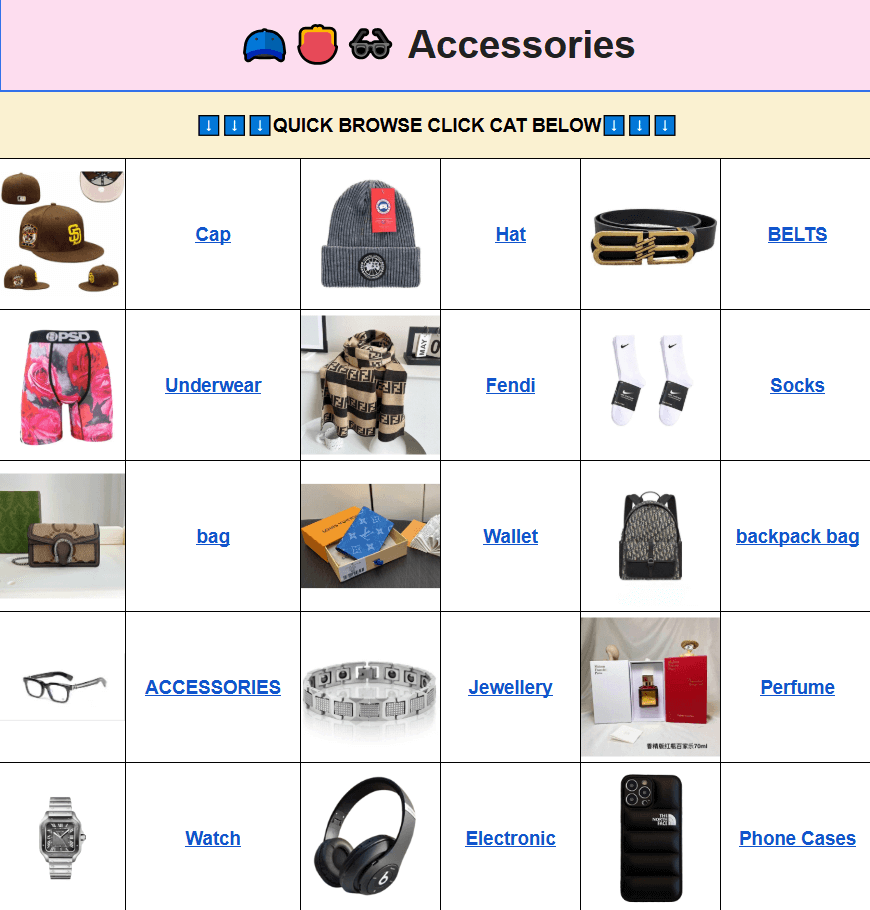
Check edge finishing, seams, strap attachments, buckles, zippers, lining, and visible surface defects. For structured bags, look at whether the corners and panels appear evenly formed. For belts, inspect the buckle attachment and the stated length. For wallets, the number and arrangement of compartments may matter more than the exterior appearance.
If an accessory has a specific functional requirement, such as fitting a passport, laptop, or particular phone model, compare its measured dimensions with the object you intend to carry. Do not rely on the product title alone.
When to Accept, Question, or Reject an Item
QC photos are most useful when they lead to a clear decision. Not every visible imperfection requires rejection, but not every issue should be dismissed as normal variation either.
Accept when the evidence matches your requirements
If the item appears to match the selected variation, the dimensions are suitable, and no significant visible defect affects your priorities, you may decide to proceed. Keep in mind that acceptance means the available evidence is sufficient for your decision; it does not mean the product is guaranteed to be flawless.
Ask questions when the evidence is incomplete
Request additional photographs or measurements if a critical detail is hidden, out of focus, or shown from an unhelpful angle. Useful requests include a close-up of a seam, a photograph of both shoes together, a clear view of a label, or a measurement across a garment.
Be specific. “Please send more photos” is less useful than “Could you provide a clear image of the inside label and measure the chest width flat from armpit to armpit?”
Reject or investigate further when a material mismatch is visible
If the wrong color, size, design, or product variation has arrived, or if there is a significant visible defect, pause before international shipment. Review the applicable inspection, return, exchange, and refund rules through the service handling the order. The available options may depend on seller policies, warehouse procedures, timing, and the type of issue.
Keep screenshots or records of the listing details and inspection findings where permitted. This makes it easier to describe the discrepancy accurately rather than relying on memory.
What Changes Before International Shipping?
Once you approve an item for shipment, the focus changes from product inspection to logistics. International buyers should confirm the final parcel contents, selected shipping method, declared information, and any applicable restrictions before dispatch.
Shipping cost may depend on actual weight, dimensional or volumetric weight, destination, packaging, and the carrier or route selected. A product that looks inexpensive on the catalog page may have a different overall cost after shipping and service charges are considered.
For destinations in the United States, Canada, the UK, the EU, Australia, New Zealand, and elsewhere, customs and tax treatment can differ. Rules may depend on the destination, product type, declared value, and shipping arrangement. Check current official customs guidance for your country, and do not assume that a particular tax treatment, delivery time, or duty outcome applies universally.
Also consider whether the parcel contains products subject to import restrictions or biosecurity requirements. If you are uncertain about a material, product type, or shipping route, ask the relevant service provider for clarification before paying for dispatch.
Frequently Asked Questions
Q: Can QC photos prove that a product is authentic?
A: No. They can show visible details such as construction, labels, and design features, but they cannot independently verify authenticity. Treat them as a visual inspection tool rather than an authentication certificate.
Q: What if the QC photos are blurry or do not show the important areas?
A: Ask for specific additional images or measurements before making a decision. If the service cannot provide useful evidence for a detail that matters to you, factor that uncertainty into your decision.
Q: Should I trust the size printed on the label?
A: Use the label as one reference, not the final answer. Compare actual measurements with the seller’s size chart and a suitable garment or shoe that you already own.
Q: Can photos show whether a fabric will be comfortable?
A: Not reliably. Photos may reveal surface texture, drape, or visible thickness, but comfort depends on factors such as fiber content, finishing, fit, and personal preference.
Q: What should I do if a visible defect appears before shipping?
A: Document the issue, identify the affected area, and contact the service handling the order. Ask about the available inspection, return, exchange, or refund procedure before authorizing international dispatch.
Q: Is a product with perfect-looking QC photos guaranteed to be high quality?
A: No. A limited set of photographs can miss hidden construction problems, material differences, and future wear. Use the images alongside specifications, seller information, and your own priorities.
Good QC review is not about finding a reason to approve every listing or rejecting every small imperfection. It is about matching the evidence to the decision you need to make. Compare the exact product variation, inspect the details that matter, verify measurements where possible, and recognize the limits of photographs before committing to international shipping.