
Buying from Taobao can be appealing when you want to compare styles, explore Chinese-marketplace listings, or find products that are difficult to locate in local stores. The challenge is knowing which listing deserves your money before an international order is placed. The Kakobuy Spreadsheet can help organize product discovery, but a product directory is not a guarantee of quality, authenticity, or successful delivery. The safer approach is to use it as a starting point, then verify the seller information, measurements, available QC photos, and shipping details before committing.
This guide explains how to move from a spreadsheet listing to a more informed Taobao purchase, with particular attention to product verification, practical inspection, and international ordering decisions.
Smart Search Tip: Looking for more? To find items instantly, use single-word keywords (e.g., “SHOES” or “T-SHIRT”) instead of long sentences for the best results.
Table of Contents
- What the Spreadsheet Can—and Cannot—Tell You
- A Safer Workflow from Discovery to Taobao
- How to Compare Listings Before Choosing
- Reading QC Photos with the Right Expectations
- Measurements, Materials, and Product Specifications
- International Ordering and Shipping Decisions
- Common Mistakes That Increase Purchase Risk
- Practical Questions About Taobao Sourcing
What the Spreadsheet Can—and Cannot—Tell You
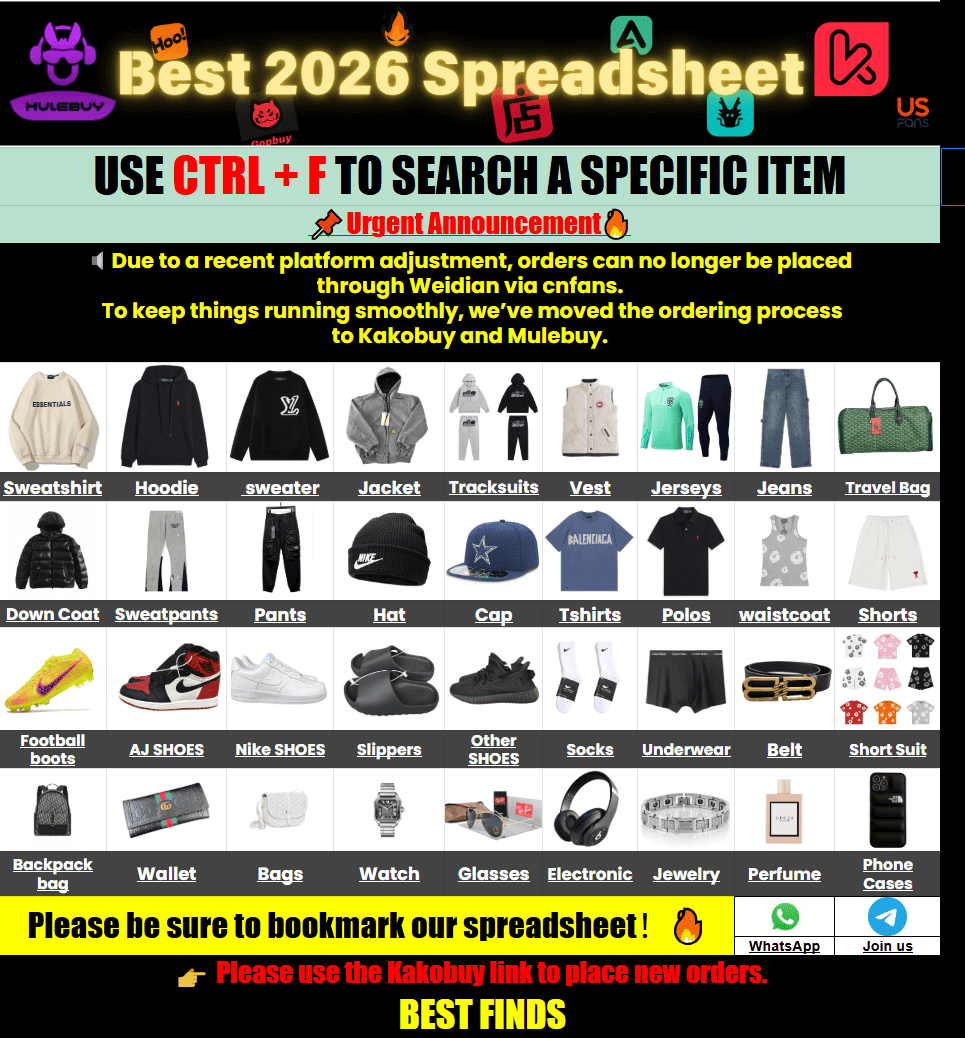
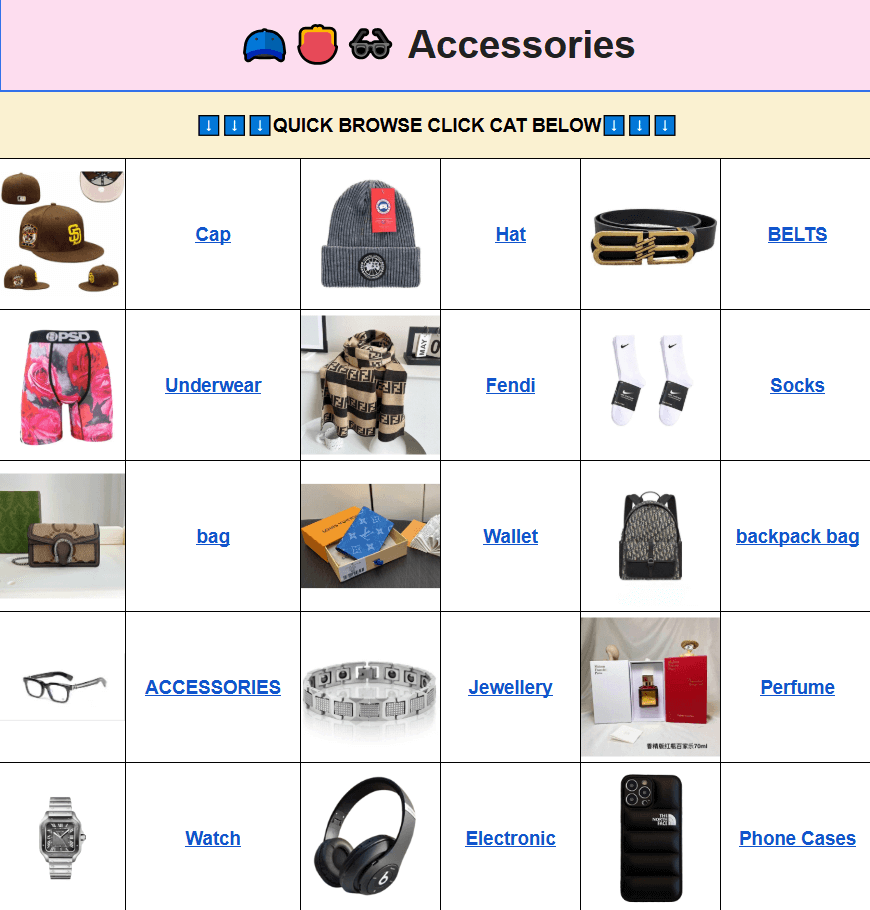
A spreadsheet-based sourcing catalog is useful because it brings product links and related information into a more convenient browsing environment. Instead of working through a large, slow document, shoppers can explore organized product pages, inspect available images, and compare different categories before opening an external shopping platform.
The distinction between discovery and purchasing matters. A listing on Best Kakobuy spreadsheet may help you locate a product or seller link, but the actual order, payment, seller communication, and shipping arrangements are handled through the relevant external shopping agent or platform. Availability, prices, and seller conditions can change after a catalog entry is published.
For that reason, treat the catalog as a research tool rather than a certification service. A well-organized listing can save time, while a careful verification process reduces the chance of choosing a product based on incomplete information.
Three questions to ask before proceeding
- Is the listing identifiable? Look for a usable seller or product link, clear product images, and enough information to distinguish the item from similar listings.
- Can the product be evaluated? Check whether measurements, material descriptions, color options, and relevant photos are available.
- Can the order be completed responsibly? Confirm the external platform’s current payment, inspection, refund, and shipping procedures before placing an order.
These checks are more useful than assuming that a product is safe simply because it appears in a popular spreadsheet or catalog.
A Safer Workflow from Discovery to Taobao
The most effective way to use the directory is to separate browsing from buying. A rushed purchase often happens when a shopper finds an attractive image, opens a seller link, and immediately commits without checking the underlying details.
- Start with a specific product goal. Decide whether you are looking for everyday footwear, a particular type of accessory, a jacket, or another defined product. This makes comparisons more meaningful.
- Open several relevant listings. Do not assume that the first result is the best option. Compare photographs, stated specifications, available sizes, and seller information.
- Record the original product link. Keep the relevant Taobao or external-platform URL with the listing title and any important notes. This makes it easier to verify the exact item later.
- Check the current seller page. Confirm that the product is still available and that the selected variation, color, and size match the item you researched.
- Ask for clarification where necessary. If a measurement, material detail, or product variation is unclear, use the available communication channel before paying.
- Review inspection information. If the agent provides QC photographs or measurements, examine them before deciding whether to keep the item or request a resolution under the applicable policy.
- Calculate the complete cost. Include the item price, service charges where applicable, domestic handling, international shipping, and any destination taxes or duties that may apply.
This workflow is deliberately slower than clicking through a single attractive listing. It is also easier to repeat and document, particularly when comparing several sellers or building a larger order.
How to Compare Listings Before Choosing
A low listed price is only one part of a purchase decision. Two products that appear similar in photographs may differ in measurements, construction, included components, or seller-provided information. A practical comparison should focus on the details that can actually be verified.
| Comparison factor | What to examine | Why it matters |
|---|---|---|
| Product identity | Title, images, variation, and original seller link | Helps prevent choosing a different item from the one researched. |
| Price | Current item price and included components | A lower price may reflect a different version, incomplete set, or missing accessory. |
| Seller information | Store details, listing history where available, and buyer feedback | Provides context, although ratings do not guarantee the condition of an individual item. |
| Specifications | Measurements, material description, color, and weight where stated | Makes it easier to compare like-for-like products. |
| Inspection options | Available QC photos, measurement requests, and resolution procedures | Shows what can be checked before an international shipment. |
| Delivery implications | Package size, weight, and shipping restrictions | May affect the final cost and whether the product can be shipped to your destination. |
When is the cheaper listing actually the better choice?
A cheaper listing may be suitable when the specifications are equivalent and the seller provides enough information to evaluate the product. However, a small price difference can be less important than an unclear size chart, missing product components, or limited inspection options.
For example, when comparing two pairs of shoes, check whether both listings refer to the same type of construction, size range, and included accessories. For accessories, compare dimensions, closure type, hardware details, and whether the advertised item includes a strap, case, or other component.
Do not interpret a catalog’s placement, product popularity, or attractive photography as proof of seller reliability. Those signals can support discovery, but the current listing still needs to be checked.
Reading QC Photos with the Right Expectations
QC photographs are most useful when they are treated as a limited inspection record rather than a complete product test. They may reveal visible issues that are difficult to notice in a polished listing photograph, but they cannot establish every aspect of a product’s quality.
What to look for in available images
- Overall shape: Check whether the item appears symmetrical and whether its structure matches the listing photographs.
- Stitching and construction: Look for visibly uneven seams, loose threads, open stitching, or other apparent defects.
- Color consistency: Compare different areas of the item and consider the effect of lighting and camera settings.
- Logos, graphics, and labels: Check alignment, placement, and visible printing issues where these details are relevant to the product.
- Hardware and closures: Inspect zippers, buckles, fasteners, and other visible components for damage or obvious misalignment.
- Footwear details: Examine the sole shape, stitching, visible glue marks, and general symmetry where the images show these areas.
- Packaging: Note visible damage or missing packaging components if they matter to the intended use.
A photo can show a visible flaw, but it cannot reliably prove fabric composition, long-term durability, chemical composition, authenticity, or how comfortable a product will be after extended use. Camera angles can also hide defects, and a small set of photographs may not show every surface.
If an issue matters to your decision, ask whether additional photographs or measurements are available. Keep the distinction clear between an observable condition and an assumption about what the product will be like in use.
Measurements, Materials, and Product Specifications
Size labels are not standardized across every Chinese-marketplace seller. A familiar US, UK, EU, Australian, or New Zealand size may not correspond directly to the same label in another listing. The most reliable approach is to compare actual measurements with an item you already own or with your measured foot length.
For clothing
Review chest width, garment length, shoulder width, sleeve length, waist, and hip measurements when they are relevant. Check whether the seller measures the garment flat or provides a body-size chart. Those methods are not interchangeable.
For loose-fitting clothing, shoulder and chest dimensions may affect the appearance more than the nominal size label. For trousers and shorts, waist and hip measurements can be more useful than simply choosing your usual size. If a chart uses centimeters, convert the measurements carefully rather than estimating by eye.
For shoes
Foot length is a useful starting point, but it is not the same as insole length or the external length of a shoe. Width, toe-box shape, sock thickness, and the intended fit can also affect comfort. When available, compare the seller’s size chart and insole measurements with your own measurements.
A size chart should be treated as seller-specific information. If the chart is unclear or inconsistent with the listing photographs, request clarification before proceeding.
For accessories
Dimensions can determine whether an accessory is practical. Check length, width, height, strap dimensions, closure type, and the size of any compartments. For bags, for example, compare the stated dimensions with the objects you expect to carry. For hats, measure head circumference where a size guide is provided.
Material descriptions also need careful reading. Words such as “leather,” “cotton,” or “metal” may be used differently across listings, and photographs alone cannot verify composition. Use the seller’s written specification as information to investigate, not as an independently tested fact.
For organized browsing, the Kakobuy Spreadsheet Shoes category is a useful starting point when your search involves footwear. The same measurement-first approach applies before moving from a catalog page to a seller listing.
International Ordering and Shipping Decisions
International delivery adds another layer of uncertainty because the product price is not the complete cost. The route, parcel dimensions, declared information, destination rules, and available shipping services can all affect the final outcome.
Check the destination before paying
- Confirm that the product can be shipped to your country or region.
- Review the available shipping methods and whether they accept the product category.
- Check whether the quoted shipping cost depends on actual weight, volumetric weight, or both.
- Understand whether the service is described as DDP or DDU, and what that means for duties and taxes at your destination.
- Review current customs, VAT, GST, and restricted-goods guidance for your country.
For buyers in the US, Canada, the UK, EU countries, Australia, New Zealand, and other destinations, the applicable rules may differ. Do not assume that a shipping option available to one country will be available to another. Where a platform offers tax or duty information, read the current terms rather than relying on older community posts.
Why package size matters
A bulky but lightweight product may be charged according to volumetric weight, depending on the shipping service. Shoes with boxes, structured bags, and large garments can therefore have different shipping implications from compact accessories. If the platform allows packaging choices, compare the effect of removing unnecessary packaging with the value of keeping it.
For a first international order, a manageable quantity is easier to inspect and troubleshoot than a large parcel containing many different products. It also makes it easier to identify which item caused a problem if the shipment arrives with an issue.
Common Mistakes That Increase Purchase Risk
Relying on the catalog instead of the current seller listing
Catalog information can become outdated. Before ordering, verify the current product title, price, available variations, and seller link. If the product has changed substantially, treat it as a new comparison rather than assuming the original entry still applies.
Choosing by image alone
Listing photographs can be edited, selectively framed, or taken under favorable lighting. Compare written specifications and request additional evidence where it is relevant. A product that looks correct in one image may have different dimensions or included components.
Ignoring the difference between a size label and a measurement
Choosing XL because you normally wear XL is not a reliable sizing method across manufacturers. Compare the seller’s measurements with a garment or footwear measurement that you know fits.
Calculating only the item price
Include service charges, domestic handling, international shipping, possible taxes, and any costs associated with a particular packaging choice. If the final amount is unclear, obtain the relevant information before placing the order.
Assuming QC photographs answer every question
Inspection images can help identify visible problems, but they cannot replace material testing, long-term use, or an independent authenticity assessment. Make decisions based on what the evidence actually shows.
Practical Questions About Taobao Sourcing
Q: Is the Kakobuy Spreadsheet the same as buying directly from Taobao?
A: No. The spreadsheet-based catalog is a product discovery and sourcing-information resource. The actual purchase is completed through an external shopping agent or platform, subject to its current procedures and terms.
Q: Can QC photos guarantee that a product is good quality?
A: No. QC photos can reveal some visible defects, construction issues, and measurement discrepancies. They cannot guarantee durability, material composition, authenticity, or long-term comfort.
Q: Should I trust the size shown in a Taobao listing?
A: Use the size label as a reference, but compare actual seller measurements whenever possible. Manufacturer sizing varies, and a familiar retail size may not fit the same way.
Q: What should I do if a catalog link no longer works?
A: Check whether the product has moved, been removed, or been replaced by another listing. Do not assume that a similarly titled product is identical. If the original item cannot be verified, choose another listing with clearer information.
Q: How can I estimate the full cost of an international order?
A: Add the item price, applicable service charges, domestic handling, international shipping, and any destination taxes or duties that may apply. Confirm the current shipping terms and destination rules before paying.
Q: Is a small first order safer than a large one?
A: A smaller order is generally easier to inspect, document, and troubleshoot. It limits the number of variables when you are learning how the external platform handles QC, storage, shipping, and issue resolution.
The Kakobuy Spreadsheet is most useful when it reduces the time spent finding products without replacing the checks that matter before an international purchase. Start with a clear product goal, compare more than one listing, verify measurements and seller details, use QC photographs realistically, and confirm the complete shipping arrangement before committing funds.