
Real time updating in Kakobuy spreadsheets matters because product information can become less useful as listings change, disappear, or receive new details. A spreadsheet or catalog may contain a useful product link today, but that does not automatically mean the same information will remain equally useful later. For people using a spreadsheet-based product directory for research, the practical question is not simply how many listings are available, but how confidently a user can identify information that is still relevant.
This guide looks at freshness from the browsing side. It explains what changing product information can affect, how to identify signs that a listing needs another check, and how QC information, specifications, and product-page details can be used together before moving from discovery to an external ordering platform.
Smart Search Tip: Looking for more? To find items instantly, use single-word keywords (e.g., “SHOES” or “T-SHIRT”) instead of long sentences for the best results.
- Why Freshness Matters When Browsing Product Spreadsheets
- What Can Change After a Product Is Listed?
- How to Check Whether a Listing Is Still Useful
- Using QC Information as a Second Check
- A Faster Workflow for Comparing Finds
- The Limits of Static Spreadsheet Information
- Practical Questions About Spreadsheet Freshness
Why Freshness Matters When Browsing Product Spreadsheets
A product spreadsheet is useful when it reduces the time required to discover and compare potential finds. That advantage becomes weaker when older information is mixed with newer information without enough context to tell them apart.
Product discovery is naturally time-sensitive. A listing can change its price, available options, images, specifications, or status. A product may also remain visible in a directory even though the original source information has changed. None of these situations necessarily means the listing is unusable. They simply mean that the information should be interpreted as a starting point for research rather than as a permanent snapshot.
For users browsing a Kakobuy spreadsheet 2026, freshness is therefore best considered alongside relevance. A newer listing is not automatically more suitable, while an older listing is not automatically worthless. The useful question is whether the information available at the time of review is sufficient for the next decision.
This distinction is particularly important when browsing a large catalog. If a user has to open many outdated or incomplete listings before finding information that can still be evaluated, the apparent size of the catalog does not necessarily translate into a faster research process.
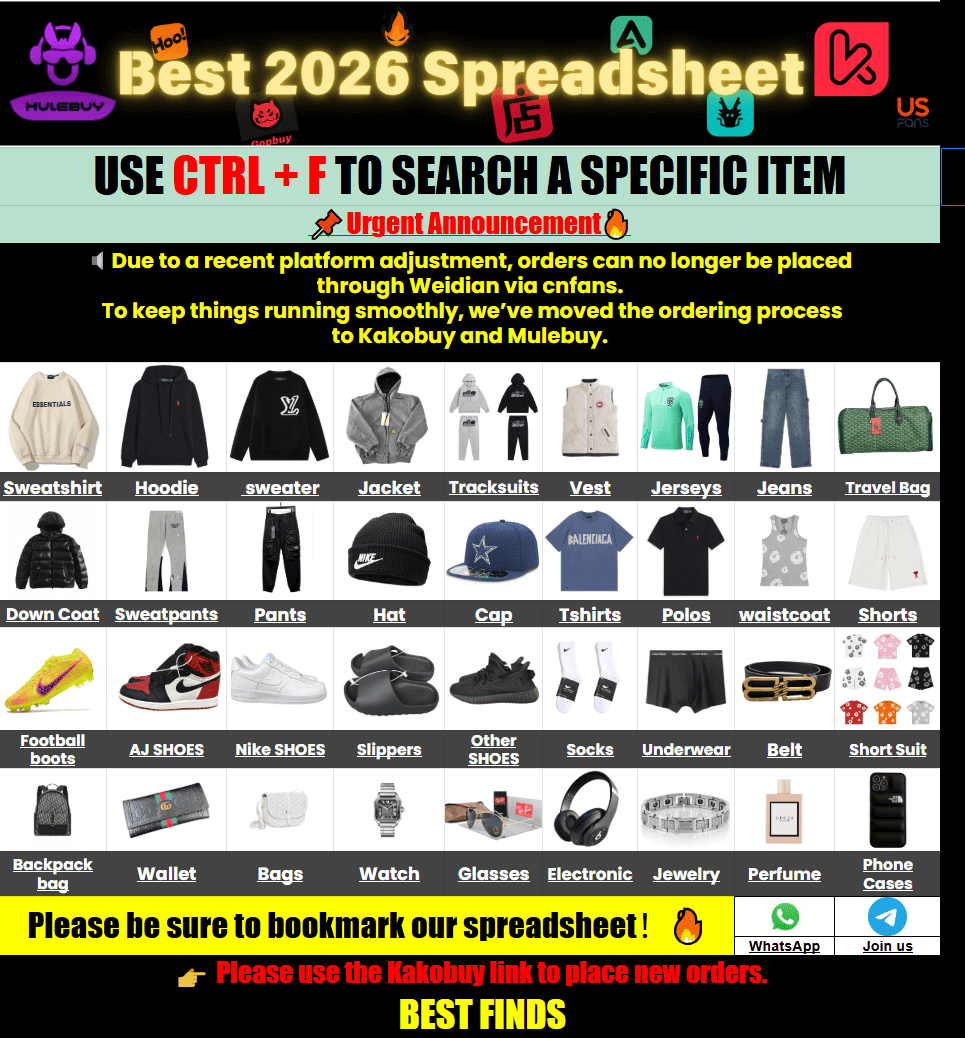
What Can Change After a Product Is Listed?
Freshness is not limited to one field such as price. Several parts of a product listing can change independently. Understanding these changes helps users decide which details deserve another look.
Product availability
A product link can remain visible while the underlying listing becomes unavailable, changes location, or no longer offers the same options. A catalog entry can still be useful for discovery, but its current status should be checked before treating it as an actionable option.
Price and purchasing conditions
Prices can change without changing the basic identity of a product. If an older spreadsheet entry shows a previous price, that figure should not automatically be treated as the current purchasing cost. Additional charges, agent fees, shipping, or other transaction-specific costs may also be separate from the displayed product information.
Available variants
Colour, size, configuration, or other selectable options can change. This is particularly relevant for apparel, footwear, and accessories. A listing that originally showed several choices may later contain fewer options.
Images and product details
Product images can also be replaced or supplemented. Changes in imagery can provide useful context, but they should not be interpreted as proof of every physical property of the item. Photographs can help with visible details such as stitching, logos, colour consistency, shape, labels, hardware, and apparent defects, while characteristics such as chemical composition or long-term durability cannot normally be established from photographs alone.
How to Check Whether a Listing Is Still Useful
A practical freshness check does not require users to investigate every possible technical detail. The objective is to establish whether the information is current enough for the next stage of comparison.
- Check the underlying product information. Look at the available title, images, specifications, options, and other visible details rather than relying only on the spreadsheet entry.
- Look for obvious inconsistencies. A mismatch between the catalog information and the current product page can indicate that the listing deserves another review.
- Check the options you actually need. For clothing or footwear, verify the currently available sizes or measurements instead of assuming that an older size range remains unchanged.
- Review current visual information. If QC photographs or other product images are available, examine them for visible characteristics that matter to the comparison.
- Separate discovery from ordering. Treat the catalog as a research interface. Once a product becomes a serious candidate, verify the relevant information through the available current product or ordering interface.
This approach is more useful than treating a spreadsheet timestamp, product position, or large number of listings as proof of freshness. The actual quality of the information depends on what can be verified when the user reviews the listing.
A simple freshness checklist
| Information to check | What the check can tell you |
|---|---|
| Product link or source page | Whether the referenced listing can still be reviewed |
| Price | Whether the displayed figure may need current verification |
| Options | Whether sizes, colours, or configurations remain available |
| Images | Whether current visual details can be inspected |
| Measurements | Whether the available dimensions support a meaningful comparison |
| QC information | Whether visible product details can be examined before ordering |
Using QC Information as a Second Check
QC information becomes especially useful when the goal is to move from general discovery toward a more detailed product comparison. It does not replace current product information, but it can add another layer of visual inspection when such information is available.
For apparel, a user might examine stitching, print alignment, labels, garment shape, visible hardware, and colour consistency. For accessories, useful visual checkpoints can include symmetry, hardware, surface appearance, tags, zippers, or other visible construction details.
The key is to keep the scope of the inspection realistic. A photograph can reveal a visible defect or an obvious mismatch, but it cannot establish every characteristic of a product. For example, a photograph cannot by itself definitively establish fabric composition, long-term comfort, durability, chemical composition, or long-term performance.
For users browsing apparel-related products, a category such as Kakobuy Spreadsheet Other Stuff can be approached in the same way: use the catalog to narrow discovery, then inspect the information available for individual listings before making a purchasing decision.
QC photographs are therefore most useful as evidence about what is visibly present at the time of inspection. They should not be treated as a guarantee about properties that require physical examination or information from another source.
A Faster Workflow for Comparing Finds
Fresh information is valuable partly because it reduces unnecessary research. A structured browsing workflow can help users spend more time comparing relevant products and less time repeatedly checking information that is no longer useful.
Start broad, then narrow quickly
Begin with the product category or keyword that matches the intended search. A large catalog becomes easier to work with when the initial search removes unrelated products rather than requiring every listing to be opened individually.
Use the spreadsheet as a discovery layer
The spreadsheet-style catalog is most useful at the discovery stage. Use it to identify products, compare available information, and create a short list. There is little value in treating every entry as equally important once the initial search has produced several relevant candidates.
Re-check the shortlist
After narrowing the list, revisit the details that could have changed. Pay particular attention to product availability, price, variants, measurements, and images. This second pass is where freshness becomes practical rather than theoretical.
Compare measurable information
When products involve sizing, actual measurements are generally more useful than relying solely on labels such as S, M, L, or XL. Depending on the product, useful dimensions can include chest width, garment length, shoulder width, sleeve length, waist, hip, foot length, or insole length.
The same principle applies beyond clothing. Where a product has a meaningful specification, comparing the stated specification is usually more informative than comparing marketing language alone.
Move to the external ordering stage only after verification
The catalog’s role is discovery and sourcing research. When a product has been shortlisted, the information needed for an actual order should be checked through the relevant current ordering or shopping interface. This creates a useful separation between finding an item and confirming its present purchasing details.
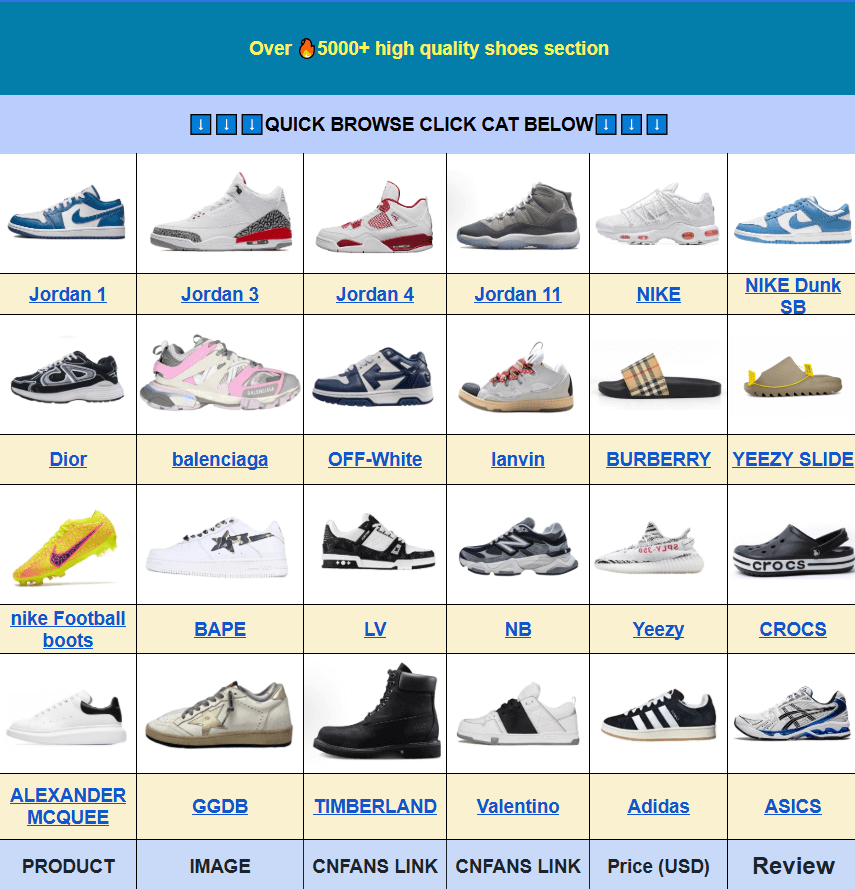
The Limits of Static Spreadsheet Information
No spreadsheet-based catalog should be interpreted as a permanent record of every product condition. Even a carefully maintained collection can contain information that changes after it was added.
This is particularly relevant when users interpret a listing as if every field were updated at exactly the same time. Without verified information about the underlying update mechanism, it is safer to think in terms of information freshness rather than assuming automatic synchronization.
That distinction also prevents an important mistake: assuming that a product appearing in a catalog guarantees current stock, current pricing, or immediate availability. The presence of an entry establishes that the product information was available in the catalog, but it does not by itself establish every current transaction detail.
For international users, the same caution applies to delivery costs, customs treatment, VAT or GST, and other destination-specific conditions. Those factors can depend on the destination, shipping route, package characteristics, and current rules. If a current figure or regulation is not verified, it should not be treated as a fixed part of the product listing.
A useful catalog therefore does not need to eliminate every possible change. Its practical value comes from helping users discover relevant products efficiently and giving them a clearer starting point for checking information that matters before purchase.
Practical Questions About Spreadsheet Freshness
Does a newer spreadsheet entry automatically mean the product is currently available?
No. A newer entry can provide more recent discovery information, but current availability should still be checked through the relevant product or ordering interface.
Why can a product listing become less useful over time?
Product information can change. Prices, variants, images, specifications, or availability may no longer match the information originally associated with a catalog entry. The listing can still help with discovery, but additional verification may be needed.
Can QC photographs confirm product quality?
They can help users inspect visible details, including stitching, labels, colour consistency, shape, hardware, and apparent defects. They cannot definitively establish characteristics such as durability, chemical composition, or long-term performance from photographs alone.
Should I rely on S, M, L, or XL labels when comparing clothing?
It is generally more useful to compare actual measurements when those measurements are available. Size labels are not universally consistent between products or manufacturers.
What should I do when spreadsheet information and a current product page do not match?
Use the current information available through the relevant product page as the basis for further verification, while treating the spreadsheet entry as a discovery reference. A mismatch is a reason to inspect the listing rather than automatically assuming either source is correct in every detail.
Is real-time information necessary for every product search?
Not always. For broad discovery, older information can still help users identify product types, categories, or potentially useful listings. Freshness becomes more important when the user is comparing current prices, availability, variants, measurements, or other details that can change.
The practical value of real time updating in Kakobuy spreadsheets is therefore best understood through the user’s workflow. Fresher information can reduce unnecessary checks and make product discovery more efficient, but freshness should not be confused with a guarantee that every product field is current at every moment.
A sensible approach is to use the catalog for discovery, narrow the options through relevant product information, inspect available QC details where applicable, compare measurable specifications, and verify the information that matters immediately before ordering. That process keeps the spreadsheet useful without asking it to provide certainty that the available information cannot establish.